The day your braces finally come off is a major milestone. After months—or even years—of metal brackets, elastic bands, and regular adjustments, looking in the mirror to see a straight, uniform smile feels incredible. However, debonding day is not the conclusion of your orthodontic journey; it is the beginning of the retention phase.
Without active retention, teeth naturally attempt to drift back toward their original positions. For patients navigating options for retainers after braces, Utah orthodontists emphasize that retention is the true safeguard of your investment. This guide breaks down why retention matters, compares available appliance styles, details realistic local costs across the Beehive State, and outlines practical habits to preserve your straight smile for decades to come.
1. Why Teeth Shift: Understanding the Science of Orthodontic Relapse
Teeth are not set rigidly in concrete; they are suspended within the jawbone by elastic connective tissues known as periodontal ligament fibers. During active orthodontic treatment, braces apply controlled mechanical forces that cause bone to remodel, breaking down bone on one side of a tooth socket and building it on the other.
Once brackets are removed, that newly formed bone and the surrounding collagen fibers require months to stabilize and consolidate. In the absence of an appliance holding the arch in place, the elastic memory of these fibers exerts pressure, pulling teeth back toward their previous positions. This biological rebound is called orthodontic relapse. In addition, natural physiological changes, bite pressure, and everyday chewing forces continue to influence alignment throughout adulthood, making retention an ongoing commitment.
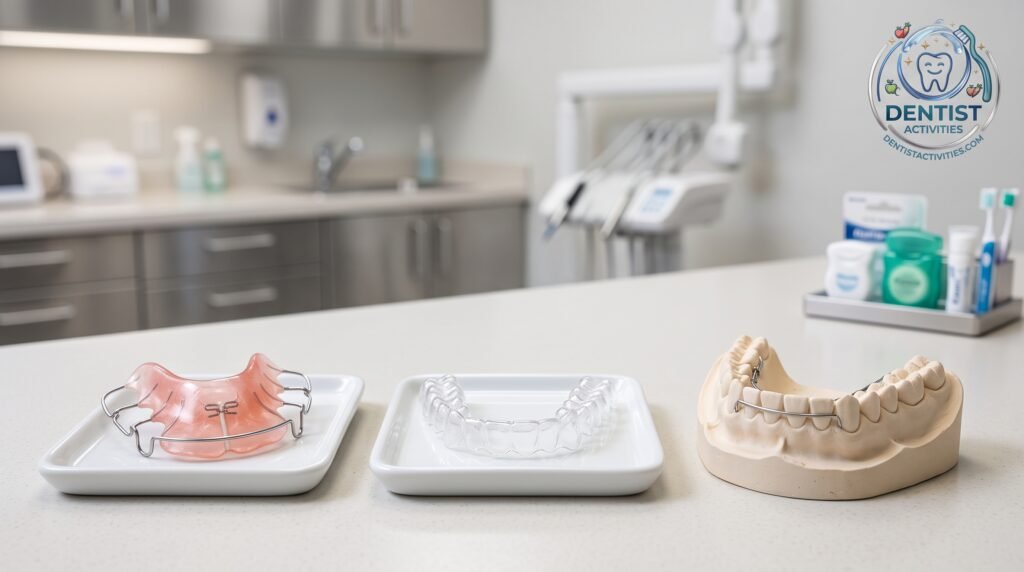
2. The Primary Retainer Types Compared: Hawley, Clear (Essix/Vivera), and Fixed
Orthodontists generally recommend three primary categories of retainers, each offering distinct advantages depending on clinical needs, lifestyle, and compliance.
Hawley Retainers
The Hawley retainer is the classic orthodontic appliance consisting of a custom-molded acrylic base resting against the palate or floor of the mouth, connected to a thin metal labial bow that spans across the front teeth.
- Pros: Highly durable, adjustable (an orthodontist can make minor tweaks without remaking the entire piece), and allows the upper and lower molars to settle naturally into an ideal bite.
- Cons: Noticeable metal wire across the smile line, thicker feel on the palate that temporarily affects speech, and can be bent if handled roughly.
Clear Plastic Retainers (Essix and Vivera)
Clear vacuum-formed or thermoformed retainers slip snugly over the dental arch, closely resembling clear aligners.
- Pros: Virtually invisible, lightweight, comfortable against soft oral tissues, and provides full-coverage protection against mild nighttime tooth grinding (bruxism).
- Cons: Cannot be adjusted mechanically; subject to wear, cracks, or warping if washed with hot water; and locks the biting surfaces, preventing subtle vertical tooth settling.
Permanent (Bonded) Retainers
A permanent or lingual retainer consists of a braided or solid wire custom-contoured and bonded with composite resin to the back surfaces of the front teeth (most commonly the lower six anterior teeth).
- Pros: 100% compliance-free—it holds teeth firmly in place 24/7 without needing to remember to put it in.
- Cons: Requires meticulous flossing with threaders or water flossers, can accumulate calculus faster, and may detach unnoticeably on a single tooth, permitting localized shifting.
3. Removable vs. Permanent Retainers: Which Option Is Right for You?
Choosing between a removable appliance and a fixed wire depends largely on personal discipline and individual bite tendencies.
Patients who had significant crowding, wide gaps (diastemas), or rotated lower incisors before treatment often benefit from a bonded wire because those areas carry the highest risk of rapid relapse. However, a bonded wire only protects the front teeth; it does not prevent premolars or molars from shifting inward or expanding outward.
For this reason, many dental providers recommend a hybrid strategy: a permanent wire on the lower anterior teeth paired with a clear removable retainer for the upper arch, or a full clear retainer worn over the bonded wire at night for complete arch stability.
4. Typical Retention Schedules: What to Expect from Day One
Your orthodontist will prescribe a specific timeline based on how extensive your tooth movement was, but the standard protocol generally follows a two-phase transition:
The golden rule of retention is straightforward: “Nighttime for a lifetime.” If your retainer feels tight when you insert it at bedtime, it is an early sign that subtle microscopic shifting has occurred during the day, indicating you should temporarily increase your daily wear hours.
5. Retainers After Braces in Utah: Average Costs and Replacement Factors
When budgeting for retainers after braces, Utah residents typically find that the initial set of retainers is bundled directly into the total comprehensive orthodontic contract. However, replacements, spare sets, or stand-alone fabrication carry separate costs:
- Clear Thermoplastic Retainer (Single Arch): $150 – $350
- Set of Clear Retainers (Upper and Lower): $300 – $600
- Hawley Wire Retainer (Per Arch): $200 – $450
- Fixed Bonded Retainer Placement: $250 – $500 per arch
- Bonded Wire Repair / Re-cementing: $75 – $200 per visit
Regional Factors in Utah
Across the Wasatch Front—including Salt Lake City, Sandy, Draper, Lehi, and Provo—orthodontic clinics often utilize direct intraoral 3D scanners rather than messy alginate impressions. Once your digital scan is stored in your clinic’s system, reordering a replacement clear tray is often significantly faster and can sometimes be done at a reduced lab turnaround fee. In more rural parts of Utah, clinics may rely on physical stone models, which are worth keeping safely at home in case a new set needs to be pressed.
6. Daily Cleaning and Maintenance: Keeping Appliances Clear and Odor-Free
Because retainers spend hours in the warm, moist environment of your mouth, they quickly accumulate oral bacteria, plaque, and mineralized tartar. Improper maintenance can lead to cloudy plastic, foul odors, and even localized gum irritation.
What to Do
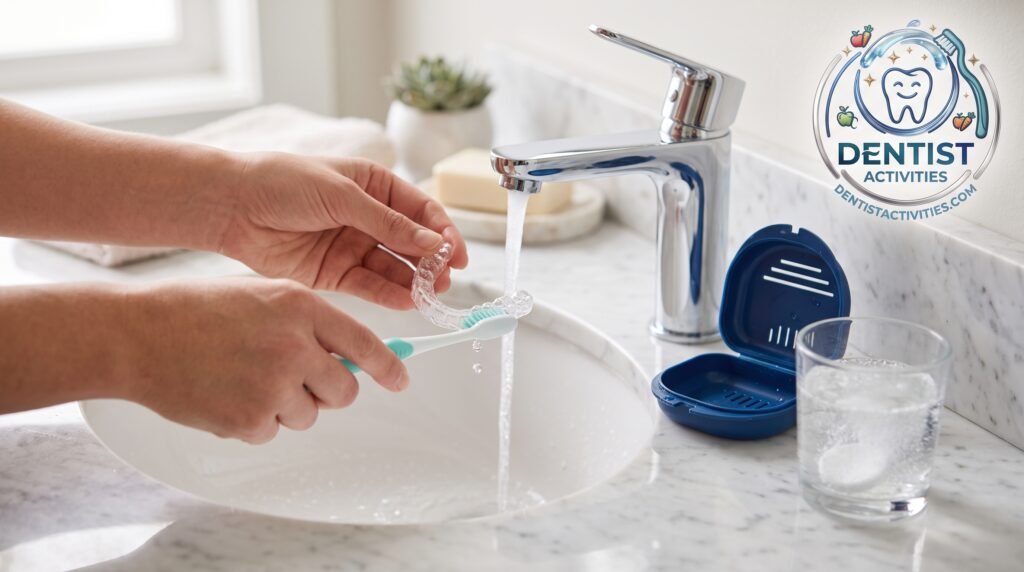
- Rinse immediately: Every time you remove your retainer, rinse it under cool or lukewarm tap water to prevent saliva from drying into a hard biofilm.
- Gentle brushing: Use a soft-bristled manual toothbrush and mild, clear liquid dish soap or non-abrasive liquid hand soap.
- Specialized soaking: Soak your appliance 2–3 times a week in an orthodontic cleaning tablet solution or a dilute ultrasonic bath to dissolve stubborn calcium buildup.
What to Avoid
- Standard toothpaste: Most commercial toothpastes contain abrasive polishing agents (silica) that create microscopic scratches on clear plastic, making it look dull and creating crevices where bacteria thrive.
- Boiling or hot water: Heat will soften and warp thermoplastic retainers instantly, ruining their precise orthodontic fit.
- Harsh chemicals: Bleach, alcohol-based mouthwashes, and boiling vinegar solutions can degrade the resin or discolor acrylic.
7. What to Do If Your Retainer Is Lost, Broken, or Tight
Retainers are surprisingly vulnerable to everyday accidents. They get wrapped in paper napkins during lunch and accidentally thrown away, stepped on when left on nightstands, or chewed up by household pets drawn to the scent of saliva.
If your retainer goes missing or breaks:
- Contact your provider immediately: Do not wait weeks until your next routine dental checkup. Teeth can noticeably migrate within 7 to 14 days without an appliance.
- Never force a deformed tray: If a clear retainer has bent, cracked across an incisor, or distorted from heat, forcing it onto your dental arch can apply adverse forces, pushing teeth in the wrong direction.
- If it feels uncomfortably tight: If you skipped wear for several days and your backup retainer feels snug but seats completely with gentle thumb pressure, wear it continuously for 48 hours to gently guide the teeth back into alignment. If it causes sharp pain or will not seat fully, schedule an office evaluation.
8. Navigating Utah’s Unique Environmental Factors for Oral Appliances
Living in Utah presents distinct environmental factors that many patients overlook when it comes to oral health and dental appliance longevity.
The high altitude and semi-arid climate of the Intermountain West often lead to chronic mouth dryness, particularly during sleep or while participating in outdoor recreation like skiing, trail running, or mountain biking along the Wasatch Range. Dry mouth (xerostomia) reduces saliva flow, which is the mouth’s natural defense against acid-producing bacteria.
When wearing clear retainers overnight in dry conditions, make sure you stay well-hydrated before bed, run a bedroom humidifier during cold winter months, and ensure your appliances are completely clean so trapped bacteria do not promote enamel demineralization. Furthermore, always store retainers inside a rigid, ventilated case—never loose in an athletic gym bag or exposed on a bathroom vanity.
Conclusion: Safeguarding Your Orthodontic Investment
Achieving a straight, healthy smile takes time, discipline, and financial dedication. While the brackets and wires of active treatment are temporary, the responsibility of maintaining that result is lifelong. By selecting the right style of appliance, sticking consistently to your prescribed wear schedule, and practicing clean daily maintenance, you can protect your bite and keep your smile aligned for good. If you ever misplace an appliance or notice unwanted movement, reach out to your local orthodontic clinic promptly to secure a replacement before relapse sets in.
Frequently Asked Questions (FAQs)
How long do retainers last before needing replacement?
Clear plastic retainers (Essix/Vivera) generally last between 1 to 3 years depending on wear habits and whether you clench or grind your teeth. Hawley wire retainers are sturdier and can last 5 to 10 years with proper care. Bonded lingual wires can remain secure for several years but require routine evaluation at your six-month dental cleanings.
Can a retainer straighten teeth that have already shifted?
Retainers are engineered to maintain alignment, not move teeth through bone. However, if minor relapse has occurred (less than 1 millimeter of drift) and the retainer still seats firmly, consistent full-time wear for several weeks may nudge the teeth back into position. For significant shifting, clear aligner touch-ups or limited re-treatment may be required.
Does dental insurance in Utah cover replacement retainers?
Most dental insurance policies provide an orthodontic lifetime maximum benefit that covers initial retention as part of the overall treatment plan. Once that lifetime maximum is exhausted, replacement retainers are usually considered an out-of-pocket elective expense. However, you can typically use pre-tax dollars from a Health Savings Account (HSA) or Flexible Spending Account (FSA) to pay for replacements.
What should I do if my permanent bonded wire pops off?
If a bonded wire detaches on one or more teeth, contact your orthodontist right away. In the interim, apply a small pea-sized ball of orthodontic relief wax over any sharp wire end to protect your tongue from irritation. Do not attempt to cut, pull, or bend the wire yourself.