When you sit in a dental chair staring up at overhead lamps, instruments, and digital monitors, it is completely natural to wonder: What happens when the dentist needs a filling, an implant, or a routine cleaning? Who do dentists go to for their own dental care?
It sounds almost like a classic riddle, but it is a genuine question that uncovers fascinating truths about the dental profession. Dentists, like everyone else, develop cracked molars, need cavity fillings, chip enamel, and require routine preventative cleanings. Yet, unlike an average patient who might choose an office based purely on online reviews or proximity to their home, a dentist knows the ins and outs of clinical technique, materials, sterilisation standards, and laboratory artistry.
When oral healthcare providers climb into the patient’s chair, they bring an exacting eye. Understanding who they choose—and why—offers valuable lessons for anyone searching for top-tier dental treatment.
1. The Myth of the Self-Treating Dentist
A common joke among patients is that dentists simply swivel a mirror, pick up a high-speed handpiece, and fill their own cavities. In reality, doing self-treatment beyond brushing and flossing is practically impossible and medically inadvisable.
The Limits of Direct Vision and Ergonomics
Dentistry demands microscopic precision, often working within margins measured in fractions of a millimetre. Operating on one’s own mouth—even with specialized dental loupes and multi-angled mirrors—disrupts depth perception and hand-eye coordination. Working in an inverted mirror reflection while managing fine motor control inside a restricted, saliva-filled oral cavity creates an unacceptable risk of tissue trauma or pulp damage.
Regulatory and Ethical Boundaries
Beyond physical limitations, medical ethics and licensing boards strongly discourage practitioners from performing complex invasive procedures on themselves or immediate family members. Accurate clinical judgment requires emotional detachment, objective diagnosis, and proper local anesthesia management—factors compromised when you are both provider and patient. Consequently, every dentist must entrust their smile to another set of hands.
2. Former Dental School Classmates and Alumni Networks
The most common destination for a practicing dentist seeking treatment is an old dental school classmate or residency colleague.
Dental training is rigorous, intimate, and deeply collaborative. Over three to four years of intensive clinical schooling, dental students spend hundreds of hours observing each other’s preparation margins, restorative polishing, manual dexterity, and composure under pressure.
When a dentist chooses a former classmate, they are not relying on marketing slogans; they are relying on firsthand knowledge of how that practitioner operates when nobody is watching.
3. Trusted In-House Associates and Practice Partners
In multi-dentist practices, group clinics, or corporate dental facilities, the most convenient and practical option sits right down the hallway.
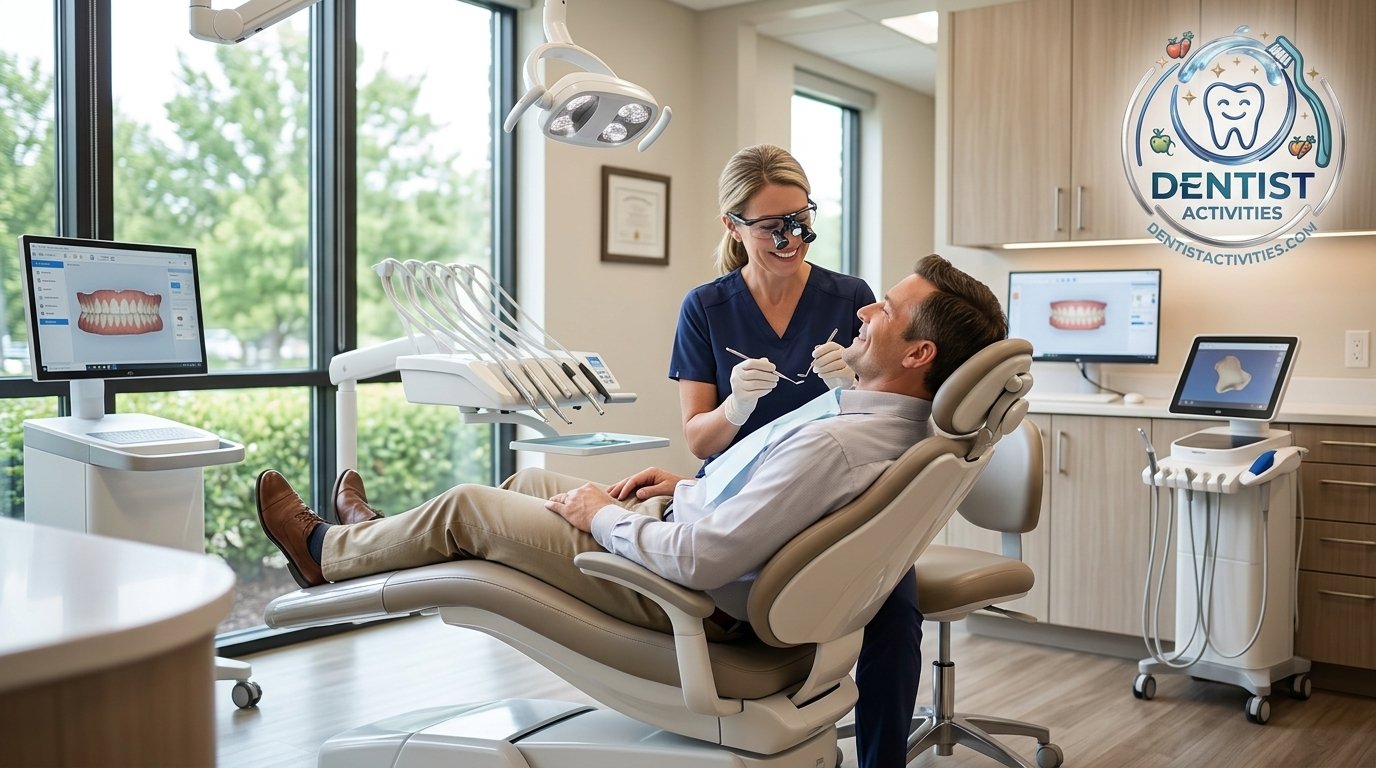
Working side-by-side in the same practice allows dentists to examine each other’s finished work every single day on post-operative X-rays, shared emergency coverages, and restorative follow-ups. A principal dentist who has observed an associate’s crown margins seat seamlessly month after month will happily sit in that associate’s chair for their own routine care.
Furthermore, in-house treatment allows for immediate follow-up. If a bite adjustment is needed after a restoration settles, the solution is only a door away.
4. Sub-Specialists Over Generalists for Advanced Care
While general dentists perform an incredible breadth of services, they are the first to recognize the boundaries of their personal scope. When a clinician requires specialized care, they do not turn to a jack-of-all-trades; they consult board-certified specialists with whom they have a proven interdisciplinary relationship.
Endodontists for Root Canals
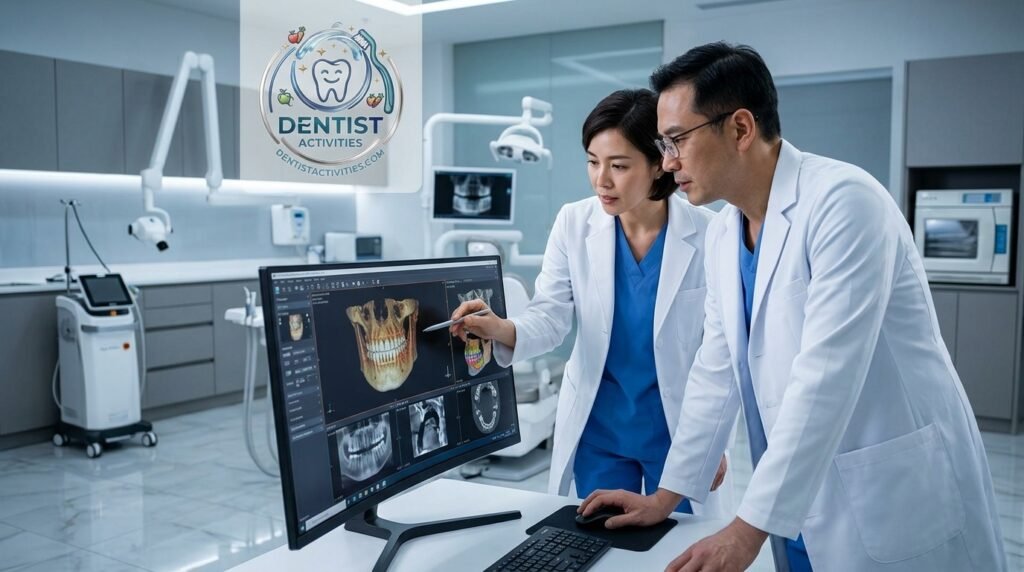
A general dentist might complete straightforward root canal treatments regularly. But if they develop complex calcified roots, curved canals, or need a re-treatment, they head straight to an endodontist equipped with surgical operating microscopes and CBCT 3D imaging.
Periodontists and Oral Surgeons for Implants
For bone grafting, sinus lifts, or implant placements near vital structures like the mandibular nerve, clinicians typically refer themselves to periodontists or oral and maxillofacial surgeons who perform these delicate surgeries daily.
Orthodontists and Prosthodontists
When dealing with complete full-mouth rehabilitations, severe bruxism wear, or complex malocclusions, dentists turn to prosthodontists (specialists in complex restorations) and orthodontists, valuing their advanced structural training over cosmetic quick-fixes.
5. Continuing Education Mentors and Study Club Peers
Dentistry evolves continuously, with rapid advances in adhesive bonding chemistry, digital scanning, and minimally invasive techniques. Highly dedicated dentists invest hundreds of hours each year in elite study clubs (such as Spear, Kois, or Pankey institutes) and hands-on continuing education programs.
Within these circles, clinicians encounter master mentors—instructors who write the textbooks and lead advanced clinical symposia. When dentists face atypical aesthetic challenges, challenging occlusion patterns, or TMJ disorders, they often travel across states or regions to be treated directly by their continuing education instructors or respected study club peers.
6. What Dentists Look for in Their Own Providers
When evaluating a colleague to work on their teeth, a dentist’s checklist looks significantly different from the average consumer’s review criteria.
| Feature | What Average Patients Often Notice | What Dentists Prioritize for Themselves |
|---|---|---|
| Diagnostics | Speed of checkup, friendly greeting | Use of high-magnification loupes, CBCT scans, isolation dams |
| Restorations | White shade matching | Marginal fit, biological width preservation, tooth conservation |
| Hygiene | Gentle touch, quick polish | Periodontal probing depth charting, calculus removal at root level |
| Technology | Sleek decor, digital patient screens | Precision of digital impressions, curing light calibration, autoclave tests |
Strict Rubber Dam Isolation
Dentists know that modern adhesive composite resins and bonded ceramic crowns fail prematurely when exposed to moisture or oral humidity. When getting a restoration, a dentist will almost always expect the clinician to use a rubber dam or reliable isolation system.
Conservative Preparation Philosophy
Dentists appreciate natural tooth structure because enamel and dentin cannot be naturally regenerated. They gravitate toward practitioners who practice biomimetic dentistry—removing only decayed or structurally compromised tissue while preserving maximal healthy structure.
7. The Crucial Role of Dental Technicians and Laboratories
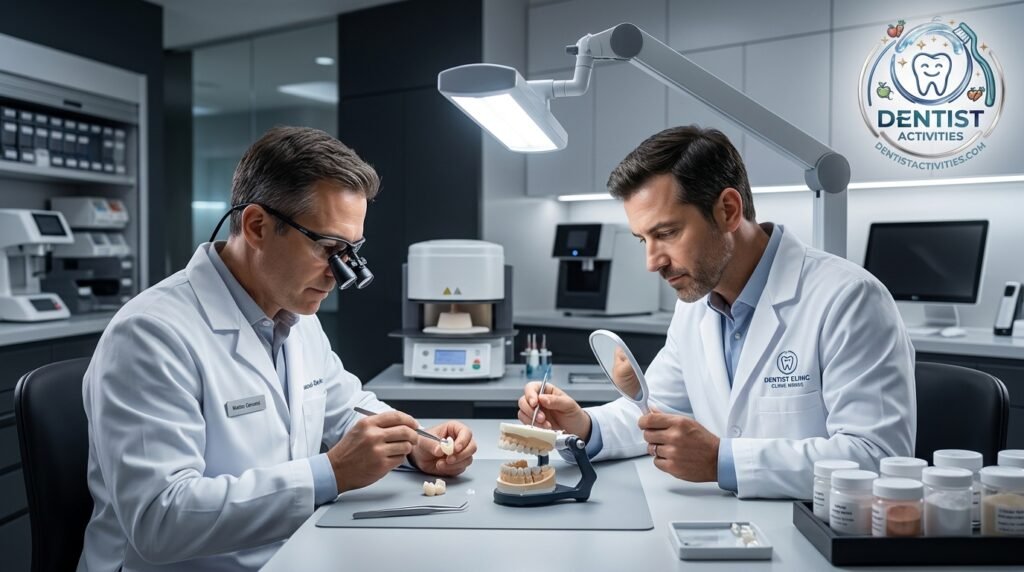
A secret known across the dental community is that the ultimate judges of clinical preparation quality are dental laboratory ceramists.
Every day, dental technicians inspect stone models and digital CAD/CAM impressions sent by dozens of local practices. They clearly see which dentists prepare smooth, distinct margins and take immaculate impressions, and which ones submit rough preps that require guesswork.
Because of this, dentists will frequently ask trusted lab technicians: “Who submits the cleanest crown preparations in our region?” When an experienced master dental technician recommends a clinician, other dentists take that recommendation as gospel.
8. What Everyday Patients Can Learn from How Dentists Choose
You do not need a dental degree to apply the same evaluation principles when selecting your own oral health provider.
- Ask Specific Questions About Technique: Inquire whether the practice routinely uses rubber dams for bonded fillings or surgical loupes with illumination for examinations.
- Observe Preventative Thoroughness: A comprehensive dental visit should always include periodontal pocket charting (measuring gum health with numbers) and an oral cancer screening, rather than just a quick gloss over tooth enamel.
- Value Conservative Approaches: Be cautious of providers who immediately recommend replacing every old amalgam filling or capping teeth that show minimal wear. Great dentists pride themselves on how much natural tooth structure they protect.
- Inspect the Hygiene Protocol: Cleanliness, clear instrument sterilization packaging opened in front of you, and organized operatory environments reflect institutional discipline that extends to restorative work.
Conclusion
So, who do dentists go to for their own work? They turn to the clinicians who demonstrate meticulous hand skills, unyielding sterilization hygiene, conservative biological principles, and proven clinical integrity. Whether it is an old dental school benchmate, a trusted practice partner down the hall, an esteemed study club mentor, or a board-certified specialist recommended by a master dental ceramist, dentists prioritize precision over marketing.
By adopting these same high standards—focusing on thorough diagnostics, isolation techniques, and preventative care—you can choose your dental home with the very same confidence as the professionals themselves.
Frequently Asked Questions (FAQs)
Can dentists fill their own teeth?
No. Because dental procedures require precise depth perception, high-magnification vision, and fine motor control in a restricted space, dentists cannot safely fill their own cavities. Self-treatment also compromises diagnostic objectivity and clinical safety.
Do dentists get nervous when they are the patient?
Yes, quite frequently. Many dentists report feeling extra vulnerability in the chair because they recognize every sound, instrument vibration, and subtle step of the procedure. However, receiving care gives clinicians greater empathy for what their own patients experience.
How do dentists know which local specialists are the best?
Dentists regularly see the clinical results of local specialists when treating mutual patients. They evaluate how well bone grafts have healed, how cleanly an implant integrates, and how smoothly an endodontic root canal filling is condensed on follow-up X-rays.
Do dentists receive free treatment from other dentists?
Historically, a tradition known as “professional courtesy” existed where colleagues treated each other at discounted rates or lab costs. In modern practice, however, due to insurance regulations, administrative compliance, and overhead expenses, dentists typically pay standard fees or bill their private dental insurance plans.