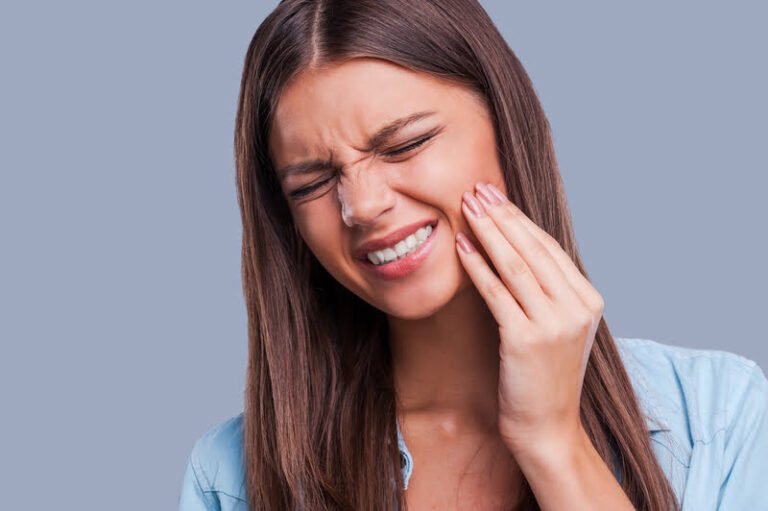
You reach up to knead a tight, aching spot in your neck or shoulders, expecting sweet relief. But a few seconds into the massage, a sudden, throbbing ache flares up deep inside one of your molars or front teeth.
It feels completely bizarre: Can massaging the muscle in the neck actually cause a toothache?
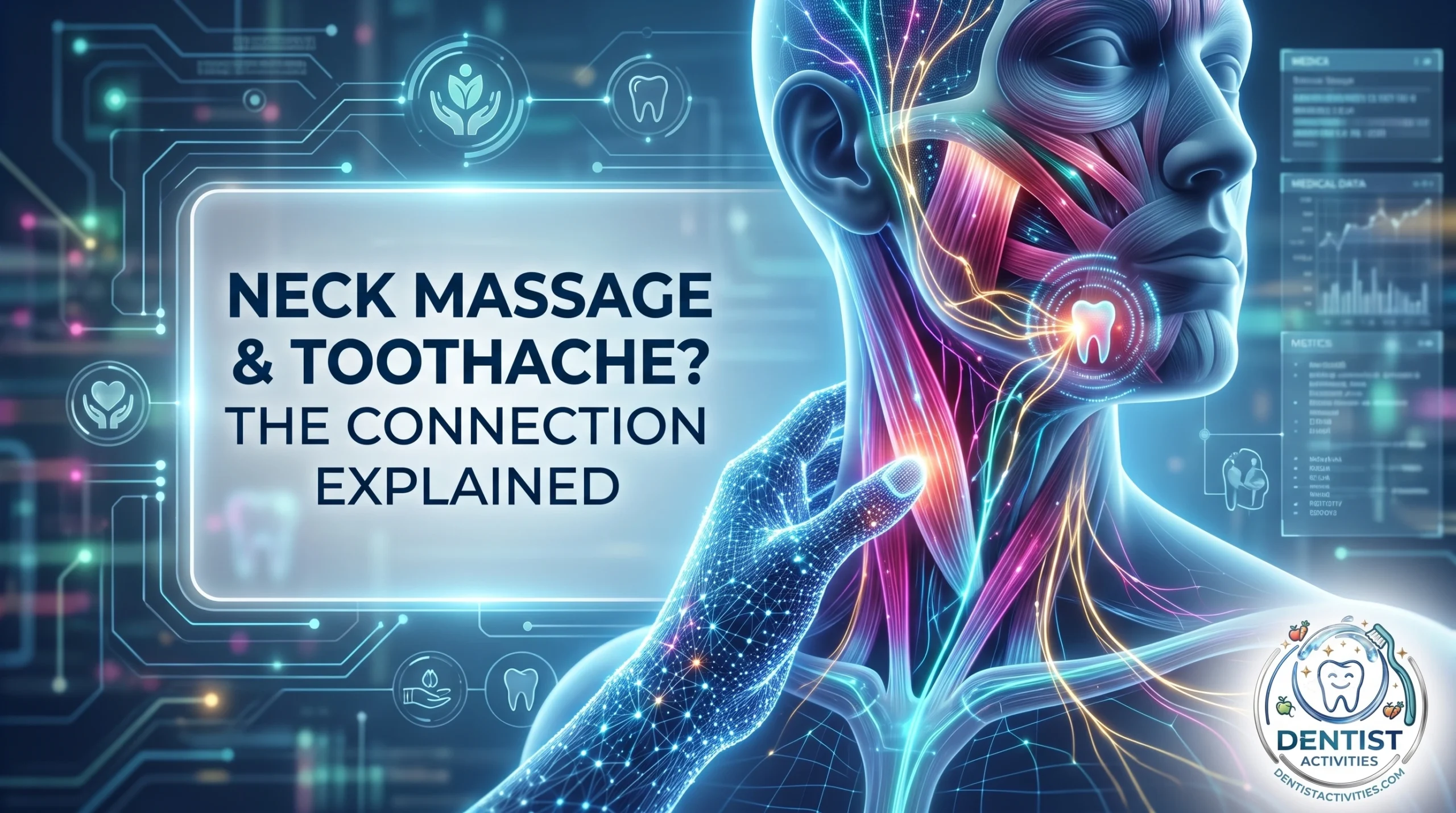
The short answer is yes, it can. While it might feel like a severe cavity or cracked tooth suddenly flared up, massaging your neck muscles can trigger referred tooth pain. When you apply pressure to hyper-irritable tight spots (known as myofascial trigger points) in specific neck and jaw muscles, pain signals travel along shared nerve pathways, causing your brain to register the sensation as a toothache.
This phenomenon—often called a non-odontogenic (non-dental) toothache or muscular toothache—is surprisingly common. Understanding the connection can save you from unnecessary dental procedures.
How Massaging Neck Muscles Triggers Tooth Pain: The Biology
To understand why a neck massage creates a toothache, you have to look at how your nervous system processes pain. Your teeth and your neck muscles do not exist in isolation; they share a massive, interconnected sensory hub.
The Role of the Trigeminal Nerve
The primary nerve responsible for sensation in your face, teeth, gums, and jaws is the trigeminal nerve (Cranial Nerve V). Meanwhile, sensory nerves from your upper neck (cervical spine C1–C3) carry signals from your neck muscles.
Deep in your brainstem sits a nerve junction called the trigeminocervical nucleus. This hub acts as a central switchboard where sensory signals from both your neck and your teeth overlap.
When you press firmly on a tight neck muscle, a surge of intense sensory input floods this central switchboard. Your brain struggles to isolate the exact origin point and “refers” the pain to a branch of the trigeminal nerve, making it feel as though a specific tooth is throbbing.
Myofascial Trigger Points: The Primary Culprits
A trigger point is a hyper-irritable knot of tightly contracted muscle fibers. When dormant, a trigger point might only feel like a dull knot. But when you press, massage, or stretch it, it fires active pain signals along predictable pathways throughout the head and face.
1. Sternocleidomastoid (SCM)
The SCM runs down the side of your neck from behind your ear to your collarbone. It handles head rotation and forward posture. Trigger points in the SCM commonly refer pain to the ear, cheekbone, and upper or lower molars, making a neck rub feel like an instant toothache.
2. Upper Trapezius
The upper trapezius stretches across the back of your neck and top of your shoulders. Chronic stress or “tech neck” (straining your neck forward at screens) creates active trigger points here. Deep tissue massage on the trapezius frequently shoots pain upward into the angle of the jaw and lower back teeth.
3. Digastric Muscle
Located just under your jawline at the top of your neck, the digastric muscle helps lower your jaw. Pressing directly under your chin or jawbone can activate digastric trigger points, sending sharp or aching pain straight into your lower front incisors.
Dental Toothache vs. Muscular Toothache: Key Differences
Determining whether your toothache stems from a bad tooth or a neck muscle is crucial. Treating a muscle problem with an unnecessary root canal or tooth extraction won’t stop the pain.
| Feature | True Dental Toothache (Odontogenic) | Muscular / Referred Toothache (Myofascial) |
|---|---|---|
| Primary Cause | Cavity, infection, crack, gum disease | Muscle trigger points in neck or jaw |
| Temperature Response | Sharp pain from hot or cold foods/drinks | Hot/cold food does not change the pain level |
| Biting Pressure | Biting down directly on the tooth hurts | Chewing on the tooth typically produces no extra pain |
| Pressure on Neck/Jaw | Pressing neck muscles has no effect on pain | Pressing neck knots directly reproduces the toothache |
| Pain Consistency | Often constant, throbbing, or worsening at night | Flares up during/after neck massage, posture stress, or clenching |
| Dental X-Rays | Shows visible decay, bone loss, or abscess | X-rays show a completely healthy tooth and root structure |
Other Factors Connecting Neck Pain and Toothaches
While direct massage of trigger points is a primary trigger, several underlying conditions link neck muscle tension to tooth discomfort:
- Temporomandibular Joint (TMJ) Disorders: The muscles that control your jaw are intimately linked with your neck muscles. Straining your neck affects your bite alignment, causing jaw muscle spasms that mimic tooth pain.
- Post-Massage Inflammation: Deep tissue massage temporarily increases local tissue inflammation and nerve sensitivity. If a neck muscle was severely tight, intense work on the area can irritate nearby nerve pathways for 24 to 48 hours.
- Cervical Spine Nerve Compression: A bulging disc or arthritis in your upper neck (C1–C3) can compress cervical nerves, sending shooting pains into the lower jaw and teeth.
What to Do If Massaging Your Neck Causes a Toothache
If rubbing your neck routinely triggers a toothache, follow these step-by-step management techniques:
1. Pause Aggressive Deep Tissue Pressure
Stop digging deeply into tight neck knots with heavy thumb pressure, massage guns, or hard lacrosse balls. Overworking an active trigger point irritates the nerve further.
2. Apply Moist Heat
Place a warm, damp towel or heating pad around your neck and shoulders for 15 to 20 minutes. Gentle heat relaxes constricted muscle fibers, increases blood flow, and lowers referred nerve signals.
3. Practice Gentle, Soft-Tissue Release
Instead of intense pressure, use gentle, sweeping strokes (effleurage) along the sides and back of your neck. Slowly tilt your ear toward your shoulder to gently stretch the sternocleidomastoid and trapezius muscles without forcing them.
4. Perform the “Self-Test”
To verify if the toothache is muscular:
- Locate the tight knot in your neck that triggered the sensation.
- Gently press it again. Does the exact tooth pain flare up?
- Now, sip cold water or tap on the tooth. If temperature and tapping don’t bother the tooth, but pressing the neck knot does, your tooth is likely healthy and the source is muscular.
When to See a Professional
Navigating referred pain requires proper clinical diagnosis.
- Rule Out Dental Issues First: Always schedule a visit with your dentist before assuming a toothache is purely muscular. They will take X-rays and perform vitality tests to ensure there is no hidden infection, abscess, or fracture.
- Consult a Physical Therapist or Orofacial Pain Specialist: If your dentist confirms your teeth and gums are 100% healthy, seek out a physical therapist, licensed massage therapist, or specialized TMJ dentist. They can provide targeted myofascial release, dry needling, and posture retraining to resolve the neck knots safely.
Summary
Massaging a muscle in your neck can absolutely cause a toothache. Trigger points in neck muscles like the sternocleidomastoid and trapezius send referred pain signals through shared nerve pathways in your brainstem, tricking your brain into feeling tooth pain.
If your tooth is insensitive to hot, cold, or biting, but throbs whenever you work on a neck knot, you are likely dealing with a muscular referred pain pattern rather than a cavity. Swap heavy deep-tissue pressure for gentle heat, soft stretching, and professional guidance to keep both your neck and your smile pain-free.