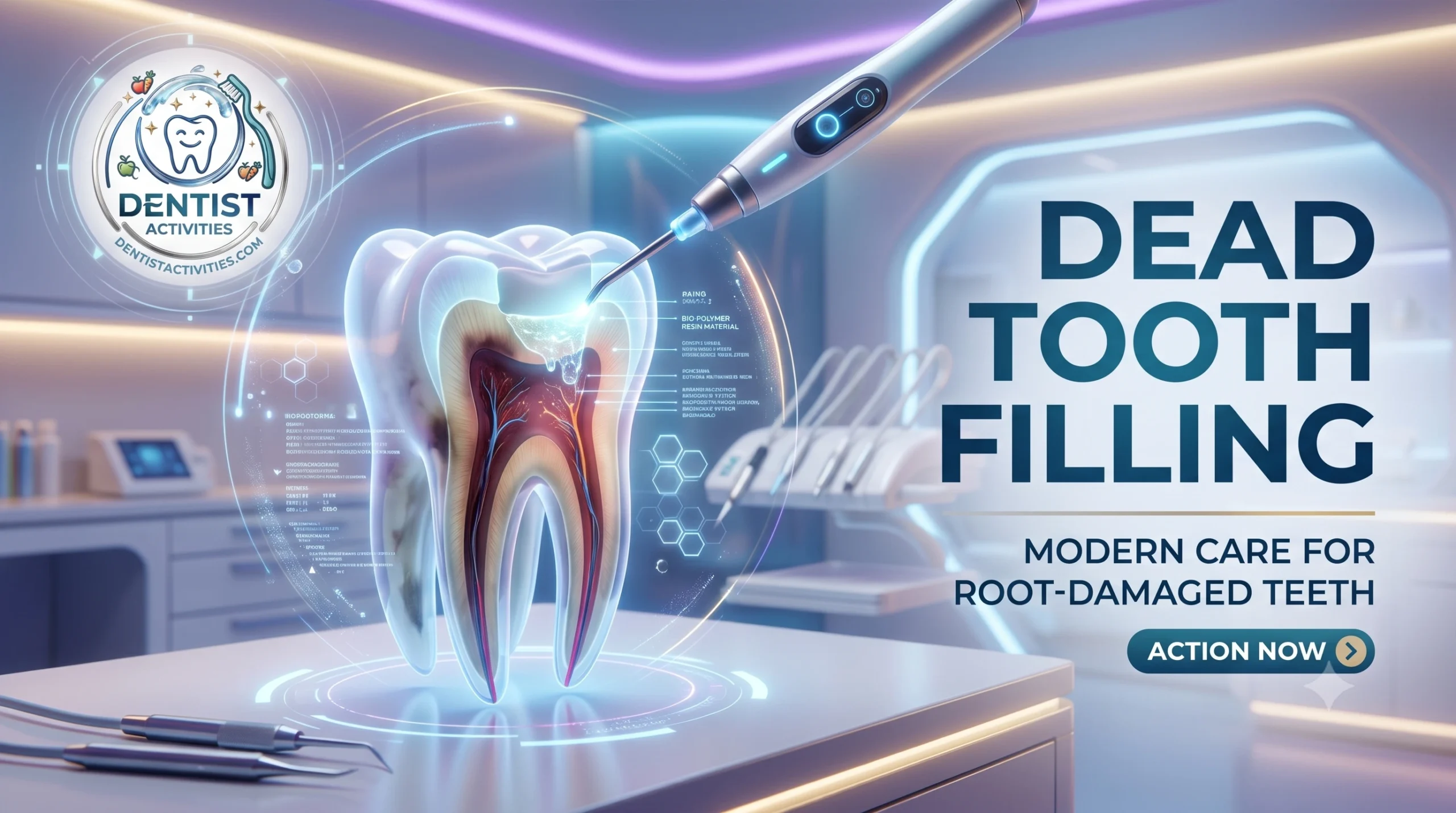
A dead tooth—clinically referred to as a non-vital tooth or a tooth with pulpal necrosis—occurs when the blood supply and nerve tissue inside the innermost layer of the tooth (the pulp) have completely died. Under normal circumstances, blood vessels supply oxygen and essential nutrients to the pulp chamber, keeping the tooth living, responsive to sensory stimuli, and resilient. Once that vascular network breaks down, the tooth can no longer nourish itself or heal from internal inflammation.
Many patients facing this diagnosis ask a straightforward question: Can a standard dead tooth filling solve the problem?
The short answer is that while a filling material is almost always involved in saving the tooth, a standard surface-level cavity filling alone is insufficient. When a tooth dies, the bacterial infection or tissue necrosis is located deep within the root canals. A typical composite or amalgam surface filling only repairs outer enamel and dentin; it cannot address the decaying tissue trapped inside the internal structure.
To properly treat the issue, an endodontic procedure—commonly known as root canal therapy—is required. During this process, the dentist removes the infected pulp, thoroughly disinfects the interior chamber, and places a specialized internal dead tooth filling (usually a biocompatible material called gutta-percha) to seal the root system completely. After the root canals are sealed, a final composite filling or full-coverage crown is placed on top to restore function and structural integrity.
Understanding Tooth Necrosis and Pulp Death
To understand why a dead tooth filling requires specialized treatment, it helps to examine the anatomy of a human tooth:
- Enamel: The hard, protective outer layer that resists daily chewing forces and protects internal tissues.
- Dentin: The dense, porous layer beneath the enamel that contains microscopic tubes leading to the nerve center.
- Dental Pulp: The soft core situated in the center of the tooth, packed with blood vessels, connective tissues, and nerves.
When bacteria bypass the enamel and dentin due to deep decay, cracks, or physical impact, they invade the pulp. The body responds with inflammation (pulpitis). However, because the pulp is enclosed within rigid walls, swelling increases internal pressure, cutting off its own blood supply. Deprived of oxygen, the tissue dies.
Standard Filling vs. Internal Root Canal Filling
It is essential to distinguish between a routine dental filling and the complete filling procedure required for a dead tooth:
| Feature | Standard Cavity Filling | Dead Tooth Root Canal Filling |
| Target Area | Surface enamel and dentin | Internal root canal system and pulp chamber |
| Nerve Status | Vital (alive and responding) | Non-vital (dead or irreversibly infected) |
| Material Used | Composite resin, glass ionomer, or amalgam | Internal gutta-percha seal + top composite/crown |
| Purpose | Stop shallow decay from progressing | Eliminate deep infection and prevent bone loss |
| Procedure Length | 30 to 60 minutes (single visit) | 60 to 90 minutes (often 1–2 visits) |
Recognizing the Common Signs and Symptoms of a Dead Tooth
Detecting a dead tooth early is critical to saving your natural tooth structure and preventing painful facial abscesses. While some non-vital teeth remain silent and symptom-free for months, most exhibit distinct visual and sensory indicators.
Discoloration and Darkening Enamel
One of the most visual signs of a dead tooth is a gradual change in color. As red blood cells within the pulp chamber decompose, iron products leak into the dentinal tubules. This process causes the tooth to turn dark yellow, grey, brown, or even black over time. Unlike surface stains caused by coffee or red wine, this discoloration comes from within the tooth and cannot be brushed away or brightened with conventional teeth-whitening products.
Persistent Pain, Gum Swelling, and Bad Breath
Pain patterns associated with pulpal death often change over time:
- The Sharp Phase: Initially, as the nerve dies, you may feel intense, throbbing pain triggered by hot or cold drinks, biting down, or even lying flat.
- The Silent Phase: Once the nerve tissue is completely dead, temperature sensitivity vanishes entirely. This leads many patients to assume the issue has healed on its own.
- The Infection Phase: Bacteria begin multiplying rapidly within the dead tissue chamber, exiting through the tip of the root into the surrounding jawbone. This leads to deep, aching pressure when chewing, localized gum swelling, and sometimes a persistent foul taste or bad breath caused by draining pus.
Primary Causes of a Non-Vital or Necrotic Tooth
A tooth does not die without a trigger. In almost every case, pulpal death stems from either bacterial invasion or sudden physical trauma.
Deep Dental Caries and Untreated Cavities
Unchecked tooth decay is the leading cause of pulpal death. When a small cavity is left untreated, decay slowly eats through enamel and dentin. Once micro-organisms breach the pulp chamber, the immune system tries to fight off the invasion. Without professional dental intervention, the pressure buildup starves the nerve, leading to irreversible pulpitis and tissue death that ultimately requires an endodontic dead tooth filling procedure.
Physical Trauma and Impact Injuries
A sudden blow to the face during sports, a motor vehicle accident, or a hard fall can instantly sever the delicate blood vessels that enter the root tip. While the physical structure of the tooth may remain completely intact without visible cracks, the lack of blood supply causes the internal pulp tissue to die over weeks, months, or even years.
Is a Simple Filling Enough, or Do You Need Root Canal Therapy?
A common point of confusion for patients is whether a dead tooth filling can be placed without undergoing a full root canal. Understanding why surface fillings fall short on non-vital teeth helps explain the necessity of comprehensive endodontic care.
Why Surface Fillings Fail on Dead Teeth
If a dentist places a standard composite surface filling over a dead tooth without cleaning out the inner root chamber, they are essentially trapping active, anaerobic bacteria inside a sealed environment. The bacteria will continue to thrive on the necrotic tissue, multiplying down through the root channels into the periodontium and jawbone. Within weeks or months, severe pain, bone destruction, and painful abscesses inevitably develop.
The Vital Role of Endodontic Sealing
To save a non-vital tooth, the internal root canals must be completely cleaned, disinfected, and mechanically filled. By sealing the internal canal pathways with gutta-percha, the dentist deprives residual bacteria of oxygen and nutrients, creating an airtight barricade that allows surrounding bone and tissue to heal.
Step-by-Step Procedure for a Dead Tooth Filling and Root Canal
Understanding what happens during a root canal and dead tooth filling procedure helps relieve dental anxiety. Modern endodontic treatments are comfortable, precise, and routinely performed in one to two dental visits.
Initial Diagnosis and Digital X-Rays
Your dentist or endodontist begins with a visual exam and diagnostic imaging. Digital X-rays or 3D CBCT scans allow the clinician to view the internal root architecture, check for periapical lesions (infections at the root tip), and map out the exact number of canals present. Electric pulp testing (EPT) or thermal testing may also be conducted to confirm non-vital status.
Cleaning and Disinfecting the Canal System
- Isolation: A flexible rubber dam is placed around the target tooth to keep it dry and completely free of saliva during treatment.
- Access: A small opening is drilled into the top surface (crown) of the tooth to access the pulp chamber.
- Shaping: Using tiny, flexible endodontic files, the clinician carefully removes the dead pulp tissue and expands the canals.
- Irrigation: Antimicrobial liquids, such as sodium hypochlorite, are repeatedly flushed through the channels to dissolve organic debris and eradicate deep-seated bacteria.
Filling the Canal with Gutta-Percha
Once the channels are fully disinfected and dried, they are permanently sealed. The primary material used for this internal dead tooth filling is gutta-percha—a natural, biocompatible polymer derived from tropical trees. Gutta-percha cones are inserted into the root canals alongside a specialized adhesive sealer paste to ensure a leak-proof, airtight barrier along the entire length of the root.
Final Restoration: Composite Filling vs. Dental Crown
After the internal canals are filled, the upper structure of the tooth must be rebuilt:
- Composite Filling: If the tooth is a front tooth or retains most of its original natural wall structure, a durable, tooth-colored composite resin filling may be sufficient.
- Dental Crown: Because a dead tooth no longer receives internal blood supply, it becomes brittle over time. For back molars and premolars that absorb heavy chewing pressures, placing a full-coverage porcelain or ceramic crown is strongly recommended to prevent fractures.
Potential Risks and Complications of Leaving a Dead Tooth Untreated
Ignoring a non-vital tooth simply because it no longer hurts is a dangerous mistake. The absence of pain does not mean the infection has cleared; it means the nerve is dead, while bacteria continue to spread unchecked into neighboring tissues.
Dental Abscesses and Bone Loss
As bacteria proliferate within the empty pulp chamber, toxins escape through the apical foramina (tiny holes at the bottom of the roots). This triggers an immune response in the surrounding jawbone, forming a painful, pus-filled pocket known as a periapical abscess. Over time, chronic inflammation causes localized bone resorption, eroding the jawbone structure that supports adjacent healthy teeth.
Systemic Spread of Bacterial Infection
An untreated oral infection can spread beyond the jawline. Bacteria can enter the vascular network, potentially causing facial cellulitis, Ludwig’s angina, or systemic inflammation. Prompt treatment with a root canal and dead tooth filling eliminates this risk before serious systemic complications develop.
What Is the Cost of a Dead Tooth Filling Procedure?
The financial cost of treating a dead tooth depends on several key variables, including which tooth is affected, whether a general dentist or an endodontic specialist performs the work, and the final choice of restoration.
Key Factors Influencing Treatment Expenses
- Tooth Location and Canal Complexity:
- Anterior Teeth (Front Incisors/Canines): Typically feature single canals and are simpler to treat. Average root canal cost: $600 – $1,100.
- Premolars (Mid-mouth): Usually have 1 to 2 canals. Average root canal cost: $750 – $1,300.
- Molars (Back teeth): Have 3 to 4 curved canals, requiring more time and specialized equipment. Average root canal cost: $1,000 – $1,800.
- Type of Final Restoration:
- Direct Composite Filling: $150 – $450.
- Custom Porcelain/Zirconia Crown: $800 – $2,000.
Dental Insurance Coverage and Payment Options
Most comprehensive dental insurance plans classify root canals and structural restorations as essential basic or major services, typically covering 50% to 80% of the total cost after deductibles are met. Additionally, many dental practices offer flexible monthly financing plans (such as CareCredit or in-house dental savings memberships) to help make out-of-pocket expenses manageable.
Recovery, Aftercare, and Longevity of Your Restored Tooth
Healing after a root canal and dead tooth filling procedure is generally smooth and swift. Most patients return to their normal daily routines within 24 to 48 hours.
Managing Post-Treatment Sensitivity
It is common to experience mild tenderness, swelling, or biting sensitivity for a few days following treatment. This discomfort is caused by inflammation in the surrounding ligament and bone tissues during the healing process, not by the dead nerve itself.
- Pain Relief: Over-the-counter anti-inflammatory medications (such as ibuprofen or acetaminophen) effectively manage post-procedure tenderness.
- Dietary Adjustments: Stick to soft foods (mashed potatoes, yogurt, eggs, smoothies) for the first few days. Avoid chewing hard, crunchy, or sticky foods directly on the treated tooth until your final crown or permanent filling is placed.
Long-Term Maintenance and Oral Hygiene Tips
With proper care, a dead tooth filled and protected by a crown can last a lifetime. Follow these essential habits:
- Brush Twice Daily: Use a soft-bristled toothbrush and fluoride toothpaste to protect the margins surrounding your restoration.
- Floss Everyday: Clean between your teeth daily to prevent secondary decay from forming along the edge of your filling or crown.
- Wear a Nightguard: If you grind or clench your teeth during sleep (bruxism), ask your dentist for a custom nightguard to protect your restored tooth from excessive forces.
- Schedule Regular Dental Checkups: Professional cleanings and periodic X-rays allow your dental team to monitor the integrity of the root canal seal and surrounding bone level over time.
Alternative Treatments: When Extraction Beats a Dead Tooth Filling
While saving your natural tooth is always the preferred outcome in modern dentistry, there are circumstances where a dead tooth filling and root canal are no longer viable options.
Severe Structural Fracture Below the Gumline
If a dead tooth has suffered a deep vertical root fracture, severe structural cracking, or extensive decay that extends far below the gumline and surrounding bone, an endodontic filling cannot establish a reliable seal. Attempting to save a non-restorable tooth risks persistent infection and eventual restoration failure.
Dental Implants and Bridges as Replacement Options
When extraction is unavoidable, replacing the missing tooth promptly is essential to prevent neighboring teeth from drifting out of alignment:
- Dental Implant: A titanium post surgically inserted into the jawbone that acts as an artificial root, topped with a custom porcelain crown. Implants offer the highest success rate and feel identical to natural teeth.
- Dental Bridge: A fixed restoration that anchors a prosthetic tooth to adjacent natural teeth.
- Removable Partial Denture: An economical option for replacing one or more missing teeth within an arch.
Conclusion
A non-vital tooth is a serious dental condition, but modern dentistry provides reliable solutions to preserve your smile. While a quick surface filling cannot resolve pulp death on its own, a complete dead tooth filling procedure—combining endodontic root canal therapy with a durable composite filling or protective dental crown—removes internal infection, preserves structural stability, and restores natural function.
If you notice signs such as persistent tooth discoloration, throbbing pressure when biting, or a localized gum boil, do not wait for pain to worsen. Schedule an evaluation with your dentist or endodontist immediately to determine if a dead tooth filling procedure can save your natural smile before extraction becomes necessary.
Frequently Asked Questions (FAQs)
Can a dead tooth be fixed with just a standard surface filling?
No. A standard surface filling only repairs damage to the outer enamel and dentin layers. Because a dead tooth involves infected or decaying pulp tissue deep inside the root canals, an internal root canal procedure and dead tooth filling seal are required before any surface restoration is placed.
Does getting a dead tooth filling hurt?
No. Thanks to modern local anesthetics, the procedure is no more uncomfortable than getting a routine cavity filled. Because the nerve inside the tooth is already dead, you will not feel sharp sensations during the cleaning of the canals. Mild soreness or jaw fatigue may occur during recovery, which is easily managed with over-the-counter pain relievers.
How can I tell if my dead tooth is infected?
Key signs of an active infection in a non-vital tooth include severe pain when biting down, visible swelling along the gums, a small pimple-like bump (boil) that leaks fluid, a dark grey or brown color change in the enamel, and a persistent foul taste or bad breath.
How long can you leave a dead tooth untreated?
You should never leave a dead tooth untreated. Even if the tooth does not hurt, bacteria inside the necrotic pulp chamber will continuously leak into the surrounding jawbone. Leaving a dead tooth untreated leads to painful abscesses, bone destruction, loss of adjacent teeth, and potential systemic infection risks.
What is the lifespan of a restored dead tooth?
With high-quality endodontic treatment, a sealed root canal filling, and a protective crown, a restored dead tooth can last 10 to 15 years, and often a lifetime, provided you maintain excellent daily oral hygiene habits and attend regular dental checkups.