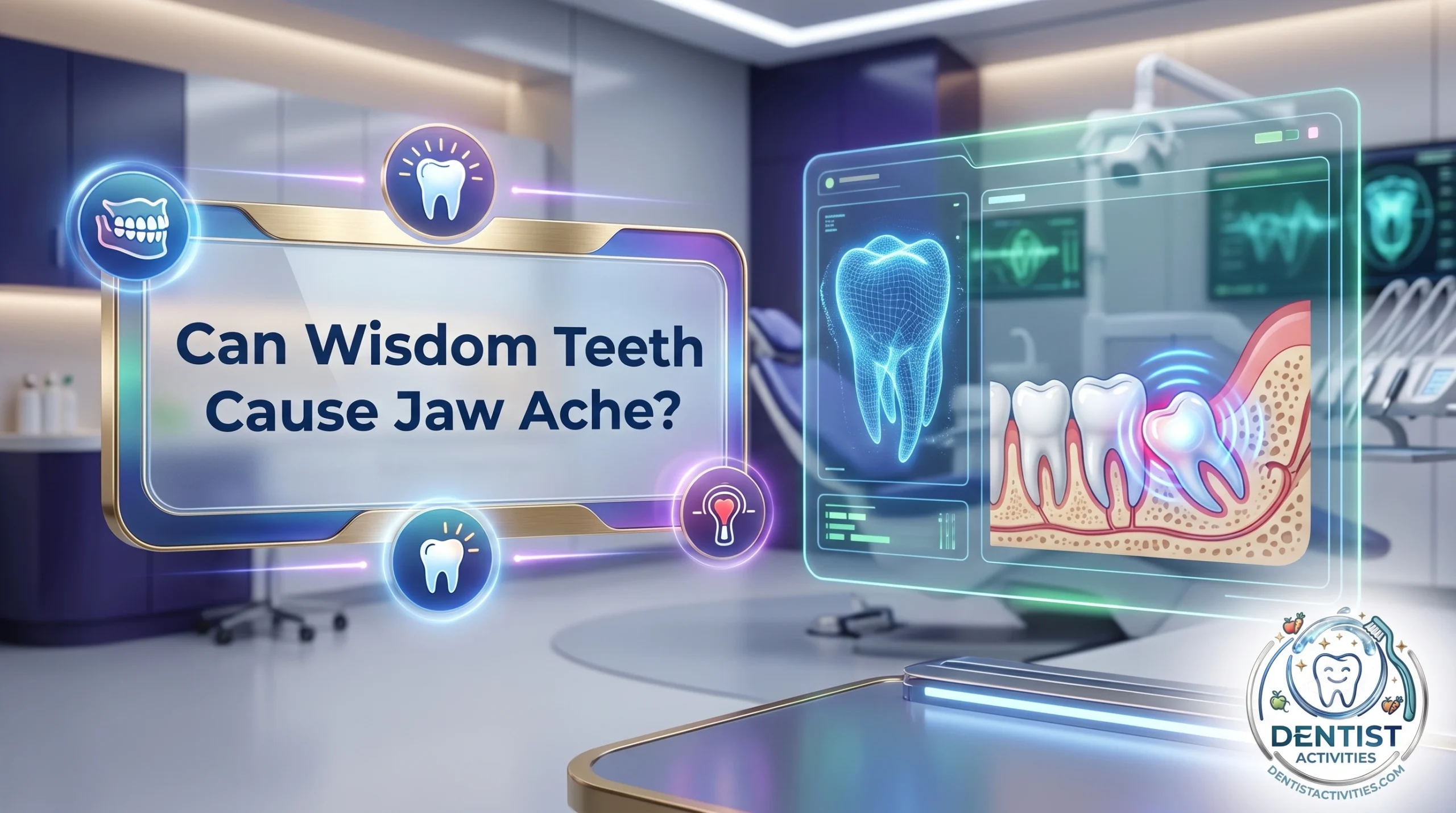
Yes, wisdom teeth can absolutely cause severe jaw ache. As the third and final set of molars—typically emerging between the ages of 17 and 25—wisdom teeth enter a mouth that often lacks sufficient space to accommodate them. When these late-arriving teeth push against existing structures, tilt horizontally, or fail to fully break through the gum line, they exert continuous mechanical force on the surrounding jawbone, nearby nerves, and neighboring teeth.Impacted wisdom teeth pressing near jaw bone and nerve channels. Source: Face & Jaw Surgery Center
Jaw ache triggered by wisdom teeth rarely remains confined to a single spot. Because the jaw is connected to a complex network of facial muscles, joints, and sensory nerves (such as the inferior alveolar nerve), irritation in the far back of the mouth frequently radiates outward. Patients often experience a dull, throbbing ache along the jawline, stiffness near the temporomandibular joint (TMJ), difficulty chewing, or pain that radiates toward the ear and neck.
To understand why this happens, it helps to examine the underlying physiological mechanisms:
- Pressure on Neighboring Teeth: An emerging wisdom tooth pushes directly against the second molar, creating force across the entire dental arch and bone frame.
- Bone Remodeling Disruption: As third molars try to force their way through dense bone tissue, localized inflammation causes deep, aching bone pain.
- Nerve Irritation: The roots of lower wisdom teeth develop close to the mandibular nerve canal, transmitting discomfort directly through the lower jaw.
Primary Mechanisms: How Wisdom Teeth Trigger Jaw Stiffness and Pain
When asking can wisdom teeth cause jaw ache, it is vital to recognize that the discomfort rarely stems from a single factor. Instead, several anatomical and inflammatory pathways contribute to jaw pain.
Impacted Wisdom Teeth and Bone Pressure
The most common culprit behind wisdom tooth jaw pain is impaction. An impacted wisdom tooth occurs when physical barriers—such as adjacent teeth, dense bone, or thick gum tissue—prevent the molar from erupting naturally.
There are four primary types of wisdom tooth impaction:
- Mesial Impaction: The tooth tilts forward at an angle toward the front of the mouth, pressing directly into the roots of the second molar.
- Distal Impaction: The tooth tilts backward toward the rear of the jaw, driving its crown into the ascending ramus of the mandible.
- Vertical Impaction: The tooth is oriented vertically but remains trapped under the bone or gum line due to lack of space.
- Horizontal Impaction: The tooth lies completely flat on its side within the jawbone, pushing forcefully against neighboring root systems.
As these trapped molars continue their biological growth cycle, they push against non-yielding bone tissue. This constant internal pressure manifests as a persistent, deep-seated jaw ache that intensifies during biting or grinding.
Pericoronitis and Localized Gum Inflammation
When a wisdom tooth partially breaks through the surface, it creates an incomplete opening in the gum tissue called an operculum. This flap of soft tissue acts as a trap for food debris, plaque, and oral bacteria. Because this area at the very back of the mouth is difficult to clean with a standard toothbrush or floss, bacteria proliferate rapidly, causing an infection known as pericoronitis.
Pericoronitis causes intense, localized gum swelling that quickly spreads into the masseter and pterygoid muscles—the primary muscles responsible for opening and closing your mouth. This triggers a condition called trismus (commonly known as lockjaw), where moving or stretching the jaw causes sharp pain and muscle spasms.
Is Your Jaw Ache Caused by Wisdom Teeth or TMJ Disorder?
Because the third molars sit in close physical proximity to the temporomandibular joint (TMJ), distinguishing between wisdom tooth discomfort and a primary TMJ disorder can be challenging.
| Symptom Feature | Wisdom Tooth Impaction | Temporomandibular Joint (TMJ) Disorder |
|---|---|---|
| Primary Pain Location | Posterior corner of the lower jaw, gums, and adjacent teeth | Directly in front of the ear canal, upper cheek, and jaw joint |
| Joint Noise | Rare (unless biting mechanics are altered) | Frequent clicking, popping, or grating sounds during movement |
| Swollen Gums | Common around the eruption site at the back of the mouth | Absent (gums remain healthy and unswollen) |
| Pain Pattern | Pulsating, throbbing ache aggravated by chewing | Dull, chronic aching linked to stress, clenching, or teeth grinding |
| Sensory Changes | Occasional localized numbness near the chin or lip | Frequent headaches, neck stiffness, and facial muscle fatigue |
In many clinical cases, wisdom teeth actually trigger or worsen TMJ issues. When an emerging wisdom tooth disrupts your normal bite alignment, your jaw automatically shifts into an unnatural position to compensate while chewing. This unnatural movement strains the temporomandibular joints on both sides, leading to secondary TMJ inflammation and muscle fatigue.
Recognizing Associated Symptoms: When Jaw Pain Spreads
Jaw ache caused by wisdom teeth rarely stays localized. Due to shared nerve pathways and muscle groups across the craniofacial region, pain frequently radiates to adjacent areas:
- Earaches and Tinnitus: Pain signals traveling along the trigeminal nerve can register as a deep ear ache or ringing sensation, even when the ear itself is healthy.
- Tension Headaches: Persistent muscle tension in the masseter muscle can radiate up into the temples, triggering chronic tension headaches.
- Neck and Shoulder Stiffness: Spasms in the jaw muscles often trigger compensatory tension in the upper neck and trapezius muscles.
- Sinus Pressure: Upper wisdom teeth possess roots that extend near the maxillary sinus cavities. As these top molars push upward, they can cause sinus congestion, facial pressure, and pain beneath the eyes.
Home Remedies and Immediate Relief for Wisdom Tooth Jaw Pain
While home remedies cannot resolve an impacted tooth or correct structural crowding, they can help manage pain and reduce localized inflammation until you see a dentist.
- Warm Salt Water Rinses: Dissolve 1/2 teaspoon of salt in a glass of warm water. Gently swish around the back of your mouth for 30 seconds after meals. Salt water acts as a natural disinfectant, lowering bacterial counts and soothing inflamed gum flaps.
- Cold and Heat Therapy: Apply a flexible ice pack wrapped in a cloth to the outside of your jaw for 15 minutes at a time to numb acute pain and reduce swelling. After 48 hours, switch to a warm compress to relax tight, aching jaw muscles.
- Over-the-Counter Pain Relievers: Non-steroidal anti-inflammatory drugs (NSAIDs) such as ibuprofen help reduce both muscle ache and localized tissue inflammation.
- Topical Anesthetic Gels: Over-the-counter benzocaine gels applied directly to the sore gum line offer temporary topical numbing relief.
- Clove Oil Application: Clove oil contains eugenol, a natural anesthetic and antibacterial agent. Dilute a drop of clove oil with a carrier oil (like olive oil) and apply it gently with a cotton swab to the uncomfortable area.
Diagnostic Evaluation: How Dentists Identify the Source of Pain
To confirm whether wisdom teeth are the root cause of your jaw ache, a dentist will perform a comprehensive clinical and radiographic assessment:
- Visual and Palpation Exam: The clinician checks for gum tissue inflammation, operculum formation, pus discharge, and muscle tenderness around the jaw joint.
- Panoramic X-Rays (OPG): A full-mouth 2D X-ray captures a wide view of the entire jaw frame, revealing the exact position, angle, and root development of all four wisdom teeth relative to nearby nerve channels.
- Cone Beam CT Scan (CBCT): If the roots sit very close to the inferior alveolar nerve, a 3D CBCT scan provides cross-sectional images to plan safe surgical extraction without nerve irritation.
Professional Treatment Options: Extraction and Beyond
If diagnostic imaging confirms that your wisdom teeth are causing recurrent jaw ache, your dentist or oral surgeon will recommend a definitive treatment plan.
Wisdom Tooth Extraction Surgery
Removing the offending third molars is the most effective long-term solution for resolving wisdom tooth jaw pain. Depending on the complexity of the case, extraction can be performed under local anesthesia, conscious sedation, or general anesthesia.
- Simple Extraction: Used for fully erupted wisdom teeth with straight roots. The tooth is loosened with dental instruments and removed gently.
- Surgical Extraction: Required for impacted teeth buried under gum or bone tissue. The surgeon creates a small incision in the gum, removes any covering bone structure, and often divides the tooth into smaller sections for easy removal.
Non-Surgical Management Strategies
In select situations—such as when a wisdom tooth is only partially impacted, aligned correctly, and contributing minimal discomfort—non-surgical management may be considered:
- Operculectomy: Surgical removal of the overlapping flap of gum tissue (operculum) to eliminate the pocket where bacteria collect.
- Targeted Antibiotic Therapy: Prescribed to clear acute pericoronitis infections before evaluating long-term options.
- Custom Bite Splints: If jaw ache is driven by night-time grinding triggered by changing tooth contacts, a custom nightguard can protect the jaw joint while monitoring molar progress.
What to Expect During Recovery After Wisdom Tooth Removal
Experiencing mild jaw stiffness and soreness after wisdom tooth extraction is normal as the bone and muscle tissue heal.
To support smooth healing and prevent complications like a dry socket (loss of the protective blood clot in the tooth socket), adhere to these post-operative guidelines:
- Avoid Straws and Smoking: The suction created by drinking through a straw or smoking can dislodge the healing blood clot, exposing underlying bone and delaying recovery.
- Maintain a Soft Food Diet: Eat gentle foods like yogurt, mashed potatoes, scrambled eggs, and lukewarm soups for the first several days to avoid straining your jaw muscles.
- Gentle Jaw Exercises: Once acute inflammation subsides after day 3, practice gently opening and closing your mouth to restore normal jaw range of motion.
Conclusion
So, can wisdom teeth cause jaw ache? Absolutely. Whether through structural bone impaction, bacterial gum infections like pericoronitis, or altered bite mechanics that strain the TMJ, third molars are a frequent cause of chronic jaw pain and stiffness.
Ignoring persistent jaw ache can lead to progressive complications, including damage to adjacent teeth, localized bone loss, and spreading infections. If you are experiencing jaw tightness, facial pain, or throbbing pressure in the back of your mouth, schedule an evaluation with your dentist promptly. Diagnostic imaging can pinpoint the exact cause and help you chart a path toward lasting relief.
Frequently Asked Questions (FAQs)
Can an impacted wisdom tooth cause jaw pain on only one side?
Yes. Wisdom teeth rarely erupt at the exact same rate or angle on both sides of the mouth. It is very common for a single impacted wisdom tooth on the lower left or right side to cause isolated, severe jaw ache while the opposite side remains comfortable.
How long does wisdom tooth jaw ache typically last?
Flares of jaw pain from erupting or impacted wisdom teeth often occur in cycles lasting anywhere from a few days to a couple of weeks. However, as long as the tooth remains trapped or improperly aligned, the pain will likely recur with greater intensity over time until treated.
Can wisdom teeth cause jaw clicking or lockjaw?
Yes. Localized inflammation from an erupting wisdom tooth can cause muscle spasms in the chew muscles (trismus), making it difficult to open your mouth fully. Furthermore, if an impacted molar forces you to chew unevenly, the resulting strain on the temporomandibular joint can cause jaw clicking, popping, or catching.
Will taking antibiotics make wisdom tooth jaw pain go away permanently?
No. Antibiotics can clear a temporary bacterial infection (pericoronitis) around an emerging tooth, which may temporarily reduce pain and swelling. However, antibiotics cannot change the physical angle or impaction of the tooth. Once the antibiotic course finishes, the jaw ache will likely return unless the underlying impaction is resolved surgically.
What happens if I ignore jaw ache caused by wisdom teeth?
Leaving problematic wisdom teeth untreated can lead to severe complications, including structural decay on adjacent second molars, large dental cysts or tumors within the jawbone, chronic TMJ dysfunction, persistent facial infections, and permanent nerve irritation.