Dental implants are widely considered the gold standard for tooth replacement, offering a permanent, natural-looking solution that stabilizes the jawbone and restores full chewing power. However, it’s no secret that they represent a significant financial investment. If you are exploring this life-changing procedure, the primary question on your mind is undoubtedly: “How much will it cost me?”
Because the cost of dental implants is rarely a flat fee, providing a single number can be misleading. Every patient’s mouth is different, and multiple anatomical and procedural variables can swing the final price by thousands of dollars. The best way to navigate this complexity and receive a realistic estimate tailored to your specific dental landscape is to use a modern, interactive dental implants cost calculator. In this guide, we will break down exactly how these calculators work, the numerous factors that influence the final price, and how to maximize the value of your investment.
Why a Dental Implants Cost Calculator Is Your Best First Step
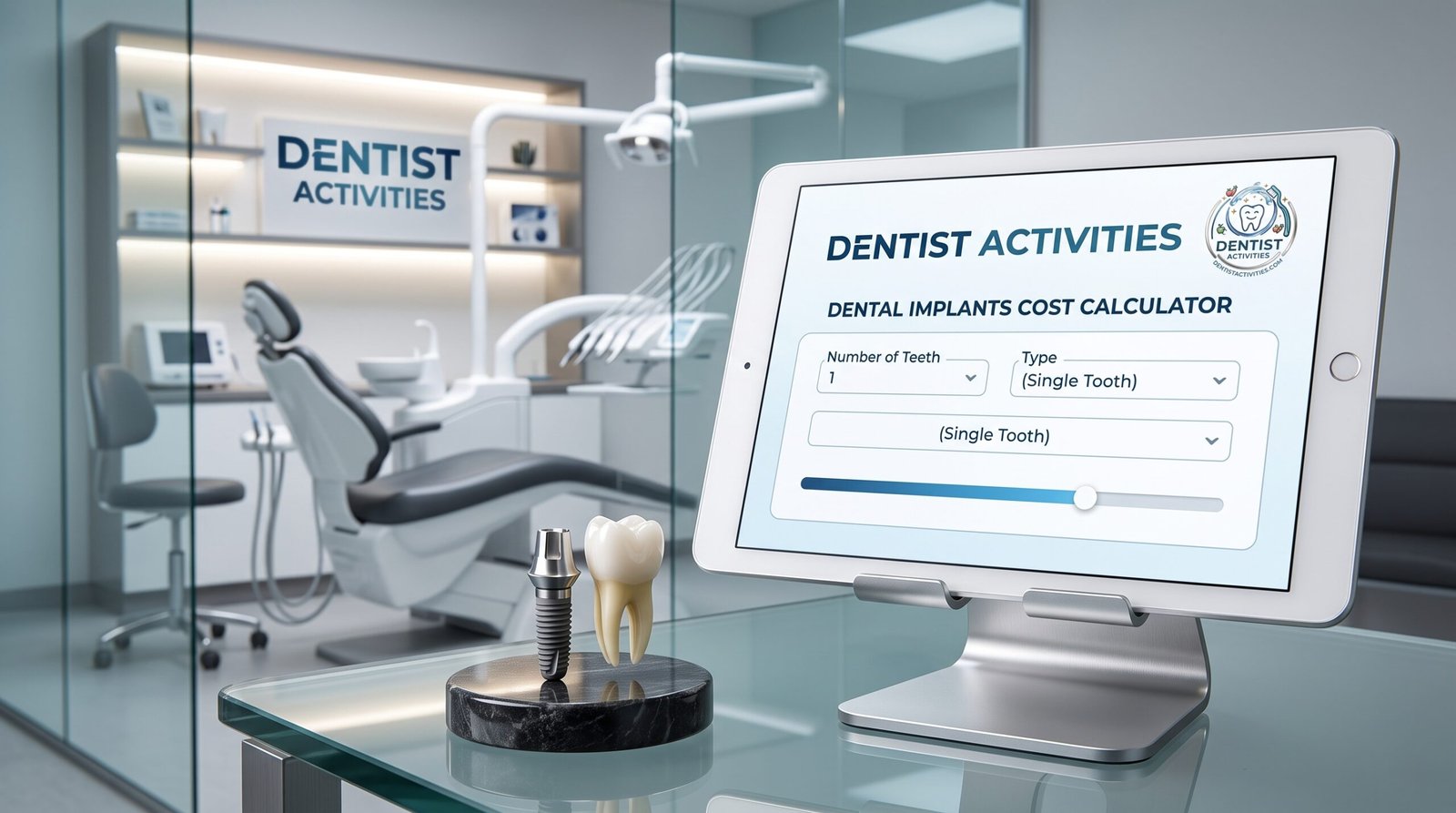
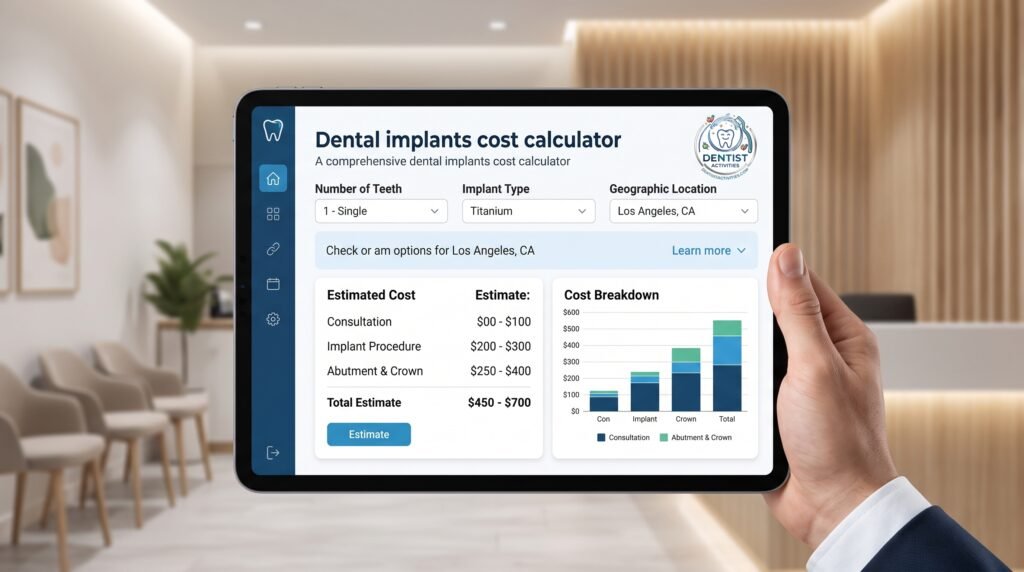
Before you sit down for an in-person consultation, a reliable dental implants cost calculator can serve as an essential budgeting tool. While it can’t replace a clinical examination, it provides a crucial initial estimate by synthesizing the known variables. A calculator empowers patients by taking a opaque, complex pricing structure and making it transparent and manageable.
This digital tool typically allows you to input basic information about your needs, such as the number of missing teeth and their location (e.g., front vs. back, which involves different levels of complexity). The calculator then accesses a database of average costs for different components of the procedure—the implant post, the abutment, and the custom crown—to generate a realistic range. In the past, patients often felt like they were walking blind into consultations; today, they can arrive armed with knowledge and reasonable expectations about the potential financial commitment. This proactive step helps reduce the initial anxiety associated with major dental care.
What Factors Does a Cost Calculator Consider?
A single implant isn’t just one item; it’s a multi-stage process involving surgical components, custom fabrications, and multiple specialist visits. A sophisticated dental implants cost calculator will ask relevant questions or make assumptions based on standard practices. It integrates the core expenses and standard add-ons that most patients face. The goal is to provide a complete figure that covers everything from initial diagnostics to the final restoration.
Initial Diagnostics and Consultations
The process always begins before surgery. Accurate planning is vital for a successful, long-lasting implant. A digital calculator assumes that you will first need a comprehensive examination. This includes advanced 3D imaging, like Cone Beam Computed Tomography (CBCT) scans, which give the oral surgeon a precise view of your bone density and nerve locations. These diagnostic images are essential but are often charged separately from the core surgery. Furthermore, initial consultation fees themselves, where you discuss your medical history and specific goals with a specialist, contribute to the upfront total. A detailed calculator should incorporate these critical preliminary steps.
The Most Significant Variable: The Number of Teeth and Implant Locations
The sheer scale of the replacement plan is the biggest factor. Are you replacing one tooth or an entire arch? Replacing a single front tooth is very different from replacing several molars in the back. A detailed dental implants cost calculator must ask for this information upfront.
Replacing a single tooth with one implant is the most straightforward scenario in terms of surgery and component costs. However, replacing multiple adjacent teeth does not always mean you need one implant post per tooth. Modern techniques, like an implant-supported bridge, can replace three or four missing teeth using just two or three implants. On the far end of the spectrum, patients needing to replace an entire top or bottom arch often utilize the popular All-on-4® technique. This innovative approach uses four precisely angled implants to support a full set of fixed prosthetic teeth. This is a significantly different cost structure than multiple single-tooth implants. Understanding that the number of implants does not always equal the number of teeth being replaced is key to understanding the total estimate, and this differentiation must be built into any effective calculator.
Advanced Preparatory Procedures and Their Financial Impact
The ideal candidate for a dental implant has strong bone density at the implant site. Unfortunately, when a tooth has been missing for a long time, the underlying jawbone begins to reabsorb, or shrink, through a natural process. To ensure the implant integrates successfully, many patients must first undergo preparatory surgeries. The need for these treatments can significantly add to the final cost generated by a dental implants cost calculator.
Bone Grafting
This is the most common preparatory procedure. A bone graft involves taking bone, either from a different part of your body (autograft) or from a synthetic/processed source (allograft), and adding it to the area with insufficient bone density. This new bone must fuse and heal for several months before the implant post can be placed. The cost can vary depending on the extent of the graft required and the material used.
Sinus Lifts (Maxillary Sinus Augmentation)
For implants placed in the upper jaw, specifically in the rear molar area, there is often limited bone. Furthermore, the sinus cavities are very close. A sinus lift involves carefully pushing the sinus membrane upward and adding bone material beneath it, creating a solid base for the implants. This is a complex surgical procedure that must be performed by a specialist.
A reliable dental implants cost calculator should, at the very least, mention these possible additions as variables. While it may not know your specific anatomy without a CBCT scan, it should prompt you with questions like “Is your jawbone considered strong?” or “Do you know if you require a bone graft?” so you can factor a possible price range for these services. Ignoring these can lead to a calculation that is significantly lower than the actual final expense.
Material Quality: Choosing Your Restoration
The materials used for both the internal implant and the final external crown can impact longevity, appearance, and price. When using a dental implants cost calculator, you will often have options regarding the final restoration.
Implant Post Material
The small screw that serves as the root of your new tooth is almost always made of titanium. This biocompatible metal is known for its incredible strength and its unique ability to integrate perfectly with human bone (osseointegration). In rare cases, for patients with specific metal allergies, an alternative like zirconia (a ceramic material) might be used. Zirconia is strong and white, making it aesthetically pleasing if gum recession occurs, but it is typically more expensive and has a slightly different track record than the established gold standard of titanium.
Crown and Prosthetic Material
The crown is the part people see. For maximum durability and a natural appearance, many dentists prefer to use zirconia or sophisticated porcelain-fused-to-metal (PFM) restorations. High-quality, aesthetic materials are more expensive. On the other hand, some clinics may offer more budget-friendly alternatives, but these might sacrifice some long-term durability or realistic appearance. A thoughtful cost calculator may allow you to select your preferred material quality to generate different estimates.
The Hidden Cost of Geographic Location and Specialist Expertise
Pricing can be dramatically different depending on where the procedure is performed. This is not about the implant components, but rather the overhead and cost of living. A dental implants cost calculator should, if possible, incorporate a variable for location. If a calculator gives a national average, you must adjust mentally for your region.
Clinics in high-cost-of-living metropolitan areas like New York City, London, or Sydney will inevitably have higher operating costs, leading to higher patient fees. Conversely, clinics in smaller towns or less urban areas may offer more competitive pricing for the same service. Furthermore, the qualification and reputation of the provider make a massive difference. An implant placed by a world-renowned oral surgeon or periodontist who performs hundreds of cases per year will command a higher fee than one placed by a general dentist who has completed a weekend course on the procedure. This isn’t just about paying for a “name”; it’s about paying for minimized risk, fewer complications, and a superior aesthetic outcome. Experience always has a value that must be considered.
Navigating Dental Insurance and Financing for Implants
Many patients are discouraged by the initial numbers generated by a dental implants cost calculator, but it’s important to explore all available financial pathways. This is the section where you must investigate your coverage and options.
Historically, dental insurance providers viewed implants as a “cosmetic” or “elective” procedure and rarely covered the cost. This is rapidly changing as the long-term oral health benefits—like preventing further bone loss and supporting surrounding teeth—become universally accepted. Modern PPO plans are more likely to offer partial coverage, particularly for the crown or the preparatory procedures. You must call your provider directly and ask very specific questions: Do you cover the implant post, the abutment, and the crown? Is there a waiting period? Do you cover bone grafts? Is there a pre-authorization requirement? Many calculators don’t integrate insurance, so you will need to apply your confirmed coverage to the calculated estimate.
Beyond insurance, almost every implant center offers multiple financing solutions. Popular medical/dental finance companies offer low-interest or even 0% interest payment plans spread over 12–24 months. These plans break a huge, upfront cost into affordable monthly installments, making high-quality dental care accessible for those who don’t have immediate savings.
Why Looking Beyond the Calculator is Crucial: Long-Term Value
A dental implants cost calculator is designed to give you the “right now” cost of the procedure. However, the true value of an implant must be assessed on a long-term timeline. While the upfront investment is high, implants are a permanent solution that can last decades—even a lifetime—if properly maintained. They are the only tooth replacement option that preserves jawbone structure.
By contrast, traditional dental bridges and dentures often have a much lower initial cost but are not permanent. Bridges put stress on neighboring healthy teeth, which may later require their own treatment. Full and partial dentures require messy adhesives, can slip and cause speech issues, and must be completely refabricated every 5–10 years as your jawbone continues to shrink. Over a 20- or 30-year span, the cumulative cost of repeated bridge replacements or denture adjustments can easily meet or exceed the one-time, all-inclusive cost of a quality dental implant. An effective calculator helps you see the immediate total, but your critical thinking must see the life-long value.
Conclusion
Using a reliable dental implants cost calculator is a powerful first step in taking control of your oral health journey. It transforms an intimidating, unknown financial burden into a set of tangible, understandable figures based on your unique dental landscape. By understanding the key variables that influence this price—including preparatory surgeries, the number of teeth, material choices, and geographic location—you can make an informed, confident decision. Remember that while a calculator can provide an excellent estimate, a personalized, comprehensive clinical examination from an experienced dental professional is the only way to receive an official, fixed price quote. Invest in the knowledge today so you can invest in your smile tomorrow.
Frequently Asked Questions (FAQs)
1. Why does my dental implants cost calculator give such a wide estimate range?
Calculators must build in allowances for common, non-negotiable anatomical variables that only a specialist can diagnose, such as the exact bone density and nerve placement. These factors dictate if you need expensive preparatory procedures like bone grafts or sinus lifts, and even the complexity of the implant surgical technique required. The range covers the minimum possible cost (simple, straightforward placement) to the maximum (full restoration with multiple preparatory surgeries).
2. What is usually NOT included in the final estimate from a dental implants cost calculator?
While advanced calculators try to be all-inclusive, basic ones often omit critical preliminary diagnostic steps like complex 3D CBCT scans. They may also not factor in the cost of an initial consultation fee. It is safe to assume the calculator’s figure represents the procedure itself and the prosthetic materials, and that diagnostics, exams, and any post-operative medications may be additional expenses. Always clarify with a specific clinic.
3. How can I reduce the overall cost after seeing a high calculation?
You can manage costs by:
- Exploring different restoration materials (e.g., opting for a PFM crown instead of full zirconia).
- Asking about phased treatment plans that space the cost out over several months.
- Discussing an implant-supported bridge instead of multiple single implants to replace several missing teeth.
- Checking with multiple accredited providers in different, perhaps lower-cost, areas for competitive pricing.
4. Are the cheaper implant services I see advertised “too good to be true”?
A price that is significantly lower than a dental implants cost calculator‘s average range for your area should be viewed with extreme caution. The cost structure of an implant procedure covers specialist labor, high-quality biocompatible materials, laboratory fabrication, and advanced diagnostic technology. “Budget” options often use inferior materials, outsource prosthetic fabrication to cut costs, or are performed by providers with very limited experience, which greatly increases the risk of complications, implant failure, and expensive revisions later on.
5. Does the dental implants cost calculator factor in my personal health conditions?
Generally, no. Basic tools calculate based on standard anatomical scenarios. They cannot assess if you have medical pre-conditions, such as uncontrolled diabetes or severe gum disease, that must be aggressively managed before implant surgery can be considered. Conditions that affect bone healing or require extra pre- or post-operative care will increase the total cost of your complete treatment plan.