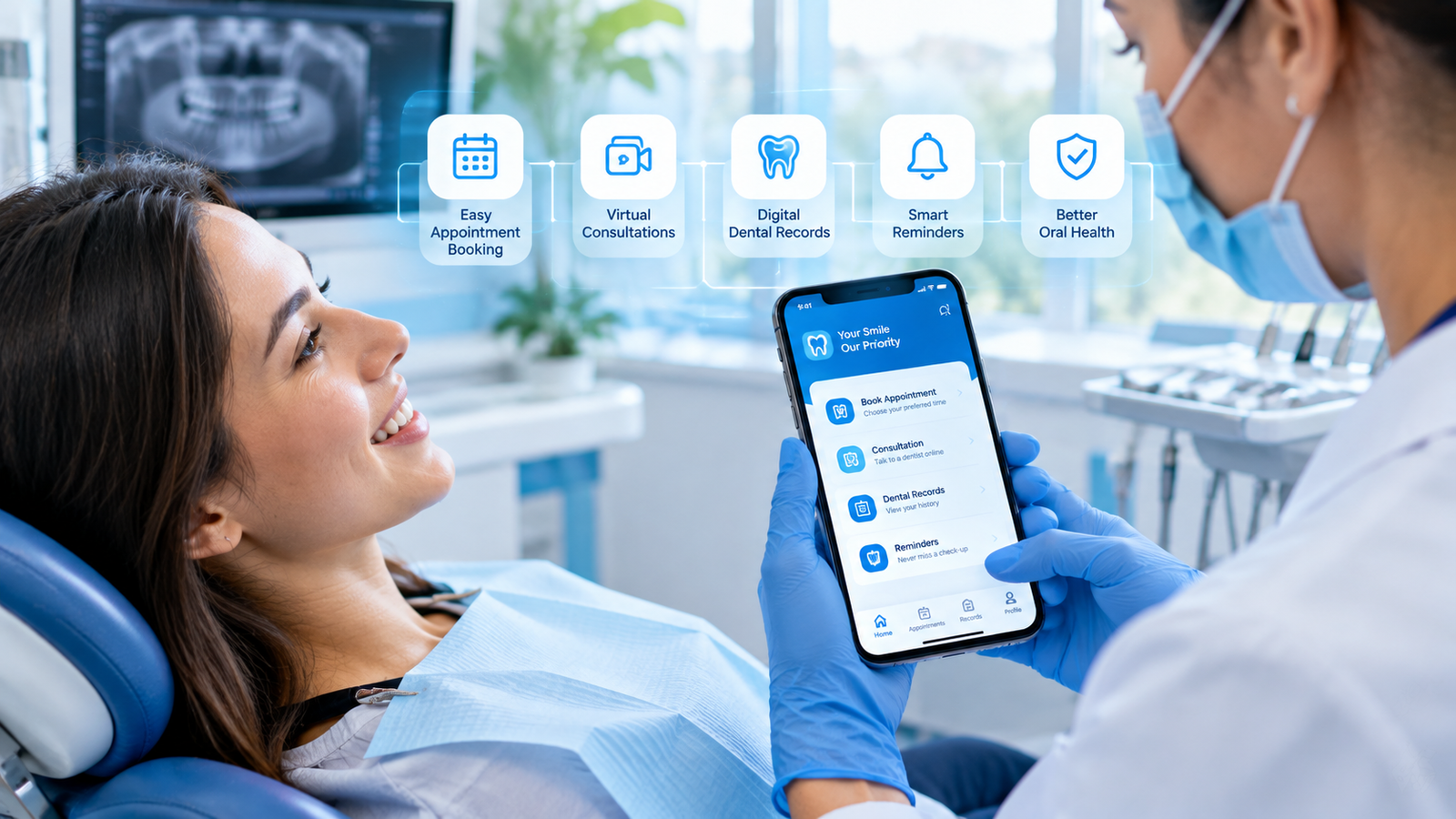
Dentistry has always felt a step behind the rest of healthcare when it comes to technology, stuck with phone-tag scheduling and paper forms clipped to a board long after other medical fields moved on. That’s finally changing, and a capable Healthcare Applications Development company has been quietly behind most of the shift building tools that treat dental care with the same digital sophistication patients now expect everywhere else.
Dental practices have unique operational demands that generic healthcare software rarely addresses well imaging formats specific to oral health, appointment patterns built around recurring cleanings rather than one-off visits, insurance verification that works differently than general medical coverage. Purpose-built dental apps are closing that gap, and the change is showing up in how patients actually experience care.
Online Booking Killed the Phone-Tag Problem
Scheduling a dental appointment used to mean calling during business hours, getting put on hold, and hoping the front desk had an opening that matched an actual work schedule. Mobile apps let patients book, reschedule, or cancel appointments any time, syncing directly with a practice’s real-time availability instead of requiring a phone conversation just to find an open slot.
This matters more than it might seem. Practices offering digital scheduling consistently report fewer no-shows and last-minute cancellations, largely because automated reminders and easy rescheduling reduce the friction that used to cause people to simply skip a call-back they never got around to making.
Digital X-Rays and Imaging Became Instantly Shareable
Traditional dental imaging meant physical film, and sharing it with a specialist or insurance provider involved actual courier delivery or a slow mail process. Digital imaging integrated into practice apps now lets X-rays and scans move instantly between a general dentist and a specialist, dramatically speeding up referrals for procedures like root canals or oral surgery that require a second provider’s input.
Patients benefit directly here too. Being able to view your own X-rays and treatment images through a patient portal, rather than only seeing them briefly on a chairside monitor, gives people a clearer understanding of what a dentist is actually recommending and why.
Teledentistry Opened Access for Routine Consultations
Not every dental concern requires an in-person visit, and teledentistry features now let patients get guidance on issues like a chipped tooth, mild sensitivity, or post-procedure questions through a video consultation instead of taking time off work for an office visit that might end with “that looks fine, keep an eye on it.”
This has proven especially valuable for rural patients without easy access to a nearby dental office, and for follow-up care after a procedure where a quick video check-in can confirm healing is on track without requiring a full in-person appointment.
Treatment Plan Visualization Improved Patient Understanding
Dental terminology is confusing to most patients, and a verbal explanation of a treatment plan often doesn’t stick the way a visual one does. Apps now offer 3D visualizations and before-and-after simulations showing exactly what a proposed treatment orthodontic work, an implant, a crown will actually look like, turning an abstract recommendation into something a patient can genuinely picture and evaluate.
This visual clarity tends to improve treatment acceptance rates meaningfully, because patients who actually understand what they’re agreeing to make more confident decisions than ones nodding along to unfamiliar clinical language they don’t fully follow.
Insurance Verification Got Dramatically Faster
Dental insurance is notoriously confusing, with coverage that varies wildly between plans and procedures. Apps integrated with insurance verification systems can now confirm coverage and estimate out-of-pocket costs before a patient ever sits in the chair, removing the unpleasant surprise of an unexpected bill after treatment is already complete.
This transparency reduces a genuine source of patient anxiety around dental care specifically, where cost has long been one of the most commonly cited reasons people delay or avoid treatment altogether.
AI-Assisted Diagnostics Started Catching What Tired Eyes Miss
Machine learning tools analyzing dental imaging can now flag early signs of cavities, bone loss, or other issues that might be easy to overlook during a routine visual exam, especially toward the end of a long clinical day. This doesn’t replace a dentist’s judgment, and it isn’t meant to it surfaces cases that deserve a closer look, functioning as a second layer of review rather than an independent diagnosis.
Early detection matters enormously in dentistry specifically, where catching a problem early often means a simple filling instead of a root canal, or a root canal instead of an extraction.
Post-Procedure Care Moved Into the App
Recovery instructions after a procedure used to come on a printed sheet, easily lost or forgotten by the time questions actually came up. Apps now deliver personalized aftercare guidance directly to a patient’s phone, with reminders for medication, dietary restrictions during healing, and a direct messaging channel to ask the practice a quick question without needing to call during office hours.
This kind of ongoing support reduces avoidable complications and unnecessary follow-up visits, since patients get clear answers exactly when a question actually comes up rather than guessing based on a sheet they can no longer find.
Building for a Specialized Field Isn’t Simple
Dental-specific features require real technical investment beyond a generic healthcare app template. Healthcare Applications Development Cost for dental practices tends to run higher when a project needs to handle specialized imaging formats, insurance integration specific to dental coverage, and compliance requirements that overlap with but aren’t identical to general medical HIPAA standards a genuine consideration for any practice or startup scoping a serious dental app.
Patient Loyalty Improved Alongside Convenience
Practices offering strong digital experiences see measurable improvements in patient retention, and the reasoning isn’t complicated. A patient who can book easily, understand their treatment plan clearly, and get quick answers to aftercare questions has fewer reasons to seek out a different practice, even if a competitor happens to be slightly closer or marginally cheaper.
Where Dental Care Is Actually Headed
Dentistry spent a long time trailing behind the rest of healthcare’s digital transformation, largely because its specific operational needs didn’t fit neatly into general medical software. Purpose-built apps changed that by solving problems specific to how dental care actually works imaging, recurring scheduling, insurance complexity rather than forcing dental practices to make do with tools built for an entirely different kind of medicine.