For generations, getting wisdom teeth extracted has been viewed almost as a universal rite of passage into adulthood. High school and college students frequently share stories of swollen cheeks, ice packs, soft-food diets, and recovery time on the couch. Because this procedure is so common, many people naturally assume that third molars are standard equipment for the human mouth.
However, modern dental medicine and evolutionary biology reveal a surprising truth: not every person has wisdom teeth.
In fact, millions of people worldwide never develop a full set of four wisdom teeth, and a significant portion of the global population never develops any at all. Whether you have never felt a single third molar emerge or you are currently navigating dental discomfort, understanding how and why wisdom teeth form can provide valuable insight into your oral health.
1. What Exactly Are Wisdom Teeth?
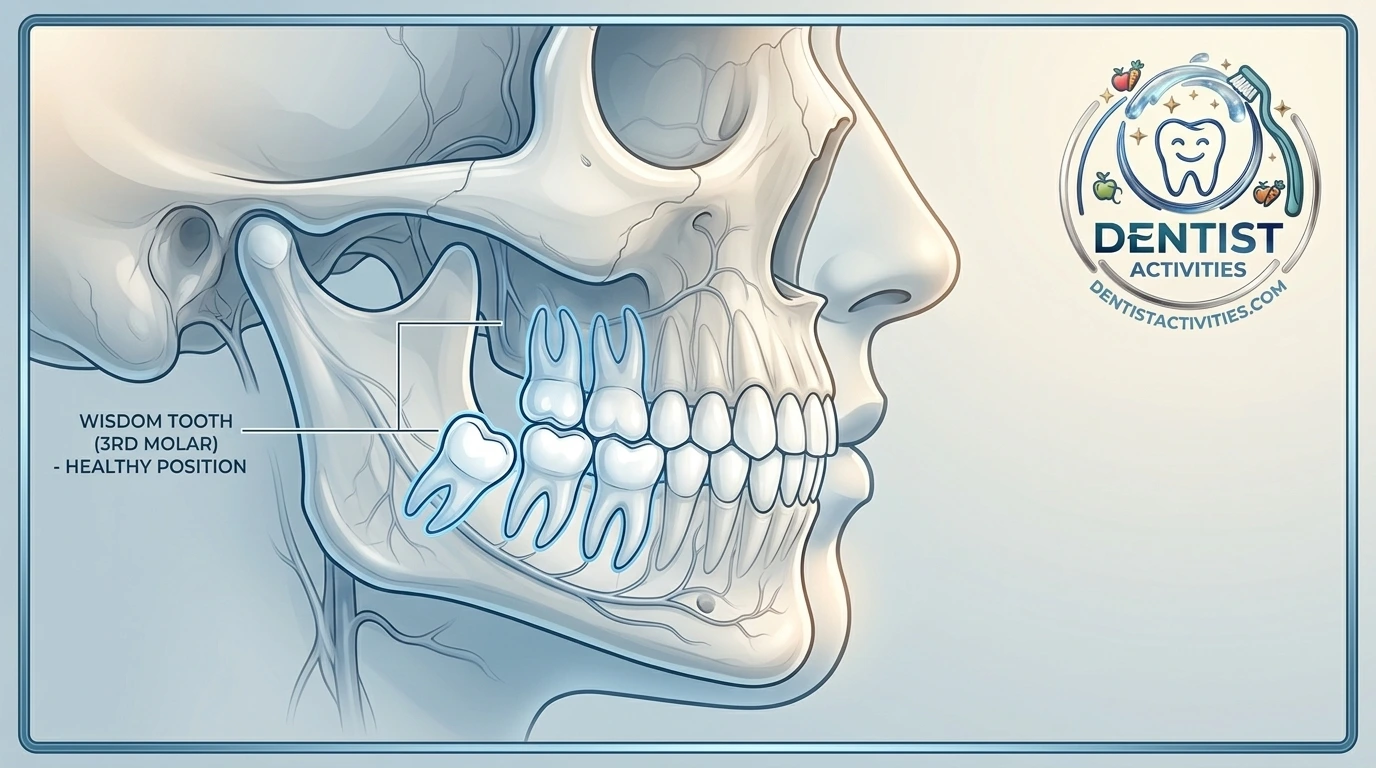
Wisdom teeth are scientifically known as third molars. They are situated at the very back of the dental arch—one in each quadrant of the mouth: the upper left, upper right, lower left, and lower right.
Why Are They Called “Wisdom” Teeth?
Unlike primary baby teeth or secondary permanent teeth that erupt during childhood, third molars are the last teeth to develop. They typically begin emerging between the ages of 17 and 25. Historically, this transitional period between late adolescence and early adulthood was referred to as the “age of wisdom,” giving these late-blooming molars their common name.
An adult human dentition typically consists of 32 permanent teeth, which includes:
- 8 Incisors (front cutting teeth)
- 4 Canines (tearing teeth)
- 8 Premolars (transitional grinding teeth)
- 8 First and Second Molars (primary chewing teeth)
- 4 Third Molars (wisdom teeth)
When all four third molars fail to form, an adult’s permanent set remains at 28 teeth.
2. Does Every Person Have Wisdom Teeth? The Biological Reality
The short answer is a definitive no. When addressing the core question—does every person have wisdom teeth?—scientific research confirms that tooth development varies significantly from person to person.
The Breakdown of Third Molar Variations
Third molar development is among the most variable traits in human dental anatomy. Across the global population, individuals generally fall into several distinct categories:
- Complete Formation (All Four Present): Individuals who develop all four third molars.
- Partial Agenesis (One to Three Present): Individuals who form one, two, or three wisdom teeth, while the missing positions remain completely empty of tooth buds.
- Complete Agenesis (Zero Present): Individuals who never form any third molar buds at all.
Clinical studies estimate that approximately 35% of the human population is born without at least one wisdom tooth. In some specific ethnic and geographical populations, this percentage rises considerably higher.
3. The Evolutionary Story: Why We Have Wisdom Teeth in the First Place
To understand why third molars exist—and why they are gradually disappearing—it helps to look back at our ancestral origins.
The Paleolithic Diet and Large Jaws
Early hominids and ancestral humans consumed a rigorous, coarse diet consisting of:
- Raw meat and fibrous game
- Roots, wild plants, and tubers
- Hard seeds, nuts, and raw foliage
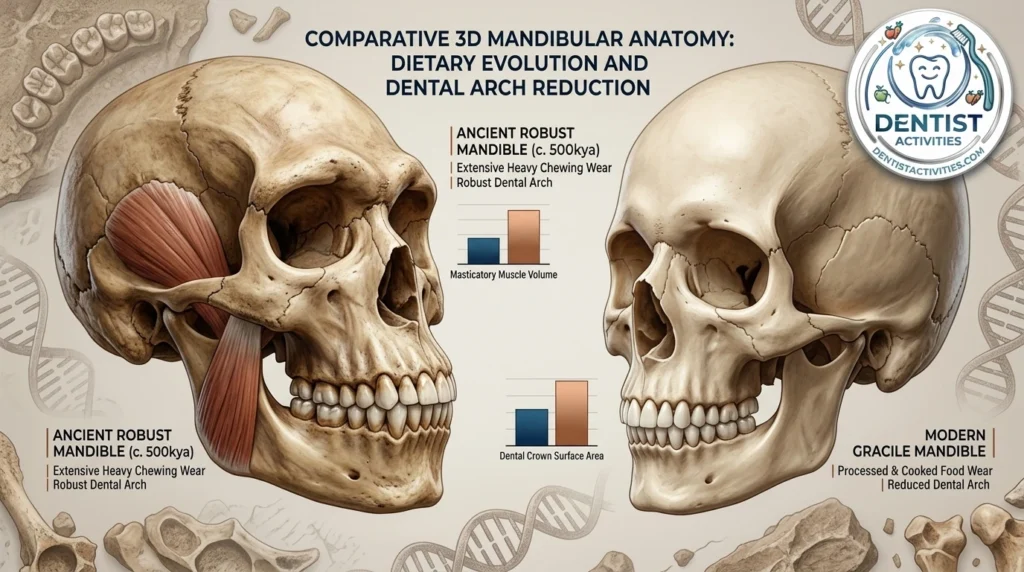
Chewing these abrasive foods required massive muscular effort and broad, sturdy jaws. Because ancient humans did not have cutlery or cooking techniques to soften food, extensive chewing quickly wore down dental enamel. Having extra, robust molars at the back of the mouth provided essential chewing power to sustain nutritional intake.
Fire, Tools, and Modern Facial Structure
The invention of controlled fire, cooking, and food processing tools fundamentally altered human biology. Cooked food required significantly less bite force, reducing the evolutionary pressure for heavy jaw structures. Over hundreds of thousands of years, human braincases expanded while facial structures and jaws became narrower and shorter.
Today, while modern human jaws are smaller, our genetic programming has not uniformly phased out the third molars. This mismatch between jaw size and tooth count is the primary reason wisdom teeth frequently become crowded or impacted.
4. The Role of Genetics in Wisdom Tooth Development
The formation of tooth buds begins deep within the jawbones during childhood. The presence, number, and shape of these buds are governed by complex genetic networks.
Genetic Signaling and PAX9 / MSX1 Genes
Specific master genes—most notably PAX9, MSX1, and AXIN2—regulate dental patterning and the development of tooth germs. Mutations or variations within these genetic pathways can halt the cellular signals required to trigger third molar growth. If the genetic switch is not activated during early childhood, no tooth germ forms, and the individual will never develop a wisdom tooth in that location.
Hereditary Inheritance Patterns
Wisdom tooth agenesis (congenital absence) runs strongly in families:
- If one or both biological parents never developed wisdom teeth, their children have a substantially higher likelihood of missing them as well.
- Family members often share similar jaw sizes, dental arch shapes, and tooth-to-jaw proportions.
5. Global Variations: Demographics and Third Molar Agenesis
The prevalence of wisdom teeth varies across different ethnic and ancestral backgrounds around the world:
| Population / Ancestry | Typical Rate of Missing Wisdom Teeth (Agenesis) |
| Indigenous Peoples of the Americas (Inuit / Native American) | 60% – 100% (Highest documented absence) |
| East Asian Populations | 30% – 45% |
| European & Middle Eastern Populations | 15% – 25% |
| African & Sub-Saharan Populations | 5% – 15% (Lowest absence; largest jaw proportions) |
These geographical variations highlight human microevolution in action. In populations that adapted to specific diets or environments over millennia, mutations causing third molar absence became widespread and favored.
6. Missing vs. Impacted: How to Tell if You Truly Don’t Have Wisdom Teeth
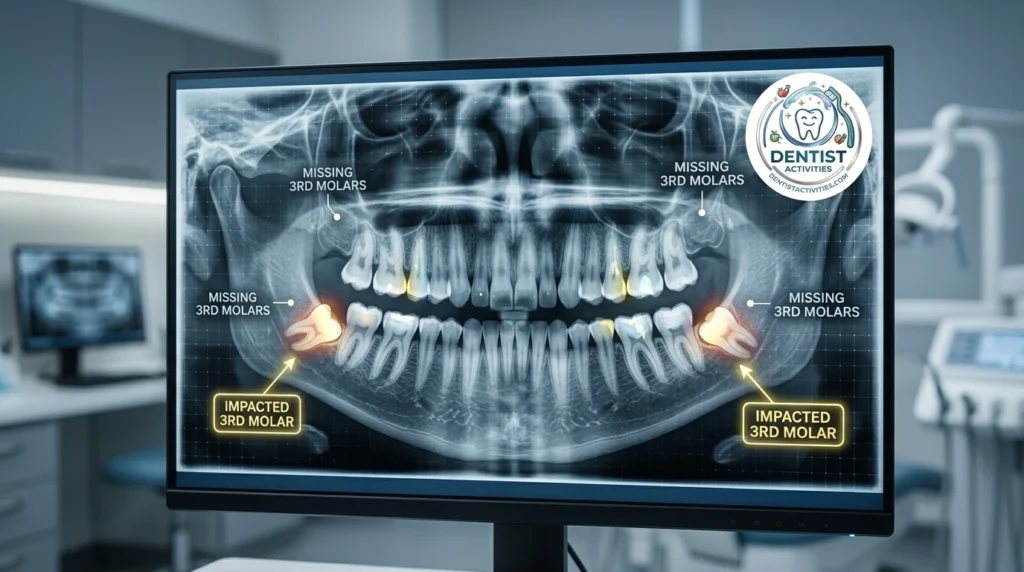
A common point of confusion occurs when someone has never seen a wisdom tooth erupt into their mouth and assumes they are completely absent. However, there is a major difference between agenesis (truly missing) and impaction (hidden beneath bone or tissue).
What Is an Impacted Wisdom Tooth?
An impacted wisdom tooth is one that has fully formed within the jawbone but cannot properly push through the gum tissue due to a lack of space, an obstructed angle, or dense bone coverage.
Impacted teeth can remain completely silent for years without causing pain, leading people to believe they do not have them.
The Importance of a Panoramic Radiograph (OPG)
The only definitive way to confirm whether a person has wisdom teeth is through a panoramic dental X-ray or Cone Beam CT (CBCT) scan. These imaging techniques show the entirety of the upper and lower jaws, allowing a dentist or oral surgeon to:
- Identify un-erupted tooth buds.
- Assess the precise angulation (horizontal, angular, or vertical).
- Measure proximity to critical anatomical structures, such as the inferior alveolar nerve and maxillary sinuses.
7. Common Complications Associated with Wisdom Teeth
When third molars do develop, our smaller modern jaws often struggle to accommodate them. This space deficiency can trigger several common oral health complications:
1. Pericoronitis (Gum Flap Infection)
When a wisdom tooth partially breaks through the gum line, a small flap of tissue (operculum) can linger over the crown. Food particles and bacteria easily become trapped underneath, creating an environment that is difficult to clean and prone to acute, painful infections.
2. Crowding and Damage to Adjacent Molars
Wisdom teeth that grow forward at an angle (mesioangular impaction) can press directly against the roots and enamel of the healthy second molars. Over time, this constant pressure can lead to:
- Root resorption of adjacent teeth.
- Hidden cavities along the gumline that are difficult to restore.
- Structural damage requiring complex dental treatment.
3. Cysts and Structural Bone Loss
Every developing tooth forms inside a fluid-filled sac within the jaw. If an impacted tooth remains trapped, this sac can expand into a dentigerous cyst. Untreated cysts can hollow out portions of the jawbone, damage surrounding nerves, and compromise neighboring tooth roots.
4. Difficulty with Daily Hygiene
Due to their position at the very back of the mouth, even fully erupted wisdom teeth can be challenging to reach with dental floss and toothbrushes. This makes them significantly more susceptible to plaque accumulation, tartar buildup, deep decay, and periodontal pocketing.
8. Do All Wisdom Teeth Need to Be Removed?
A frequent misconception is that simply having wisdom teeth means you must have them extracted. While prophylactic extraction is common, preventive retention is often entirely viable under the right conditions.
When It Is Safe to Keep Them
A dental professional may recommend monitoring your wisdom teeth rather than removing them if they:
- Are fully erupted and aligned properly with opposing teeth.
- Do not interfere with normal biting or jaw mechanics.
- Are surrounded by healthy, firm gum tissue with normal pocket depths.
- Can be cleaned thoroughly as part of your daily oral hygiene routine.
When Extraction Is Recommended
Conversely, dentists and oral maxillofacial surgeons routinely advise extraction when:
- There is evidence of active disease, deep decay, or recurrent infection.
- The teeth are fully or partially impacted with a high risk of damaging adjacent molars.
- Orthodontic treatment plans require arch clearance.
- Cysts or bone resorption are detected on routine radiographs.
9. Caring for Wisdom Teeth: Best Practices for Long-Term Oral Health
If you have kept your third molars—or if you have partially erupted teeth currently being monitored—diligent maintenance is essential to prevent long-term problems.
- Use Targeted Hygiene Tools: Standard toothbrushes often struggle to clean the distal surface behind the last molar. Utilize a single-tuft (end-tuft) brush or an ultra-slim sonic electric toothbrush head to clean hard-to-reach angles.
- Incorporate Interdental Cleaning: Use water flossers or specialized interdental picks to flush out food particles and biofilm trapped between the second and third molars.
- Keep Up with Routine Dental Exams: Schedule regular professional checkups and dental hygiene cleanings every six months. Periodic X-rays allow your dental team to monitor root health and bone levels over time.
Frequently Asked Questions (FAQs)
Does every person have wisdom teeth?
No, not every person has wisdom teeth. Around 35% of people worldwide are congenitally missing at least one wisdom tooth, and many individuals never develop any third molars at all due to genetics and evolutionary jaw changes.
At what age do wisdom teeth usually appear?
Wisdom teeth generally develop and attempt to erupt between the ages of 17 and 25. However, the underlying tooth buds can be identified on dental X-rays in children as young as 8 to 12 years old.
Can you live a normal, healthy life without wisdom teeth?
Yes, absolutely. Because modern diets consist of cooked, softer foods, third molars are no longer necessary for chewing or digestion. People born without wisdom teeth—or those who have had them removed—experience no negative effects on their nutritional health or speech.
How can I know for sure if I have wisdom teeth?
A physical check in the mirror is not enough, as impacted teeth remain beneath the gumline. The only definitive way to confirm their presence or absence is by having a dentist take a panoramic X-ray (OPG) or a 3D CBCT scan.
Is it possible to have extra wisdom teeth?
Yes. While some people lack wisdom teeth, others develop extra molars known as supernumerary teeth or “distomolars” (a fourth set of molars). This rare condition is called hyperdontia.
Conclusion
The question of whether every person has wisdom teeth highlights the continuous, dynamic nature of human evolution and genetics. While our ancient ancestors relied heavily on four sturdy third molars to process tough, raw diets, the reduction in modern human jaw sizes has rendered these teeth largely nonessential.
Today, having fewer than four wisdom teeth—or none at all—is a completely normal and increasingly common biological variation. If you are uncertain about the status of your own third molars, a routine dental visit and panoramic X-ray will give you a clear, comprehensive view of your unique smile.