Achieving predictable, high-quality results in modern restorative and surgical dentistry hinges on one fundamental prerequisite: absolute control over the operative field. The oral cavity is a harsh, dynamic environment filled with saliva, blood, gingival crevicular fluid, humidity from exhaled breath, and soft tissue movement. In adhesive dentistry, even microscopic contamination from moisture can compromise resin polymerization, cause bond degradation, lead to marginal microleakage, and result in premature restoration failure.
Dental isolation systems provide the physical, mechanical, and visual barriers required to maintain a sterile, dry, and unobstructed workspace. While traditional rubber dams have long stood as the gold standard for moisture control, the rapid evolution of modern adhesive protocols, aerosol mitigation guidelines, and high-volume practices has sparked an era of advanced, integrated isolation technology.
Investing in the right dental isolation systems directly impacts clinical precision, chairside workflow speed, patient comfort, and practice profitability. This comprehensive guide explores the mechanics, categories, comparative advantages, and real-world clinical applications of modern isolation systems.
1. What Are Dental Isolation Systems and Why Are They Critical?
Dental isolation systems refer to devices, instruments, and materials engineered to isolate specific teeth or entire quadrants from the rest of the oral cavity. Their primary clinical objective is to shield the operating site from biological contaminants while keeping surrounding soft tissues—including the tongue, cheeks, and lips—retracted and safe from rotating burs and caustic chemicals.
The clinical necessity of dental isolation systems rests on three core pillars:
Adhesive Bond Integrity and Longevity
Contemporary composite resins, bioactive restoratives, resin cements, and dental adhesives rely heavily on micromechanical retention to enamel and hybrid layer formation within dentin. Saliva contains organic proteins, mucins, and enzymes like matrix metalloproteinases that coat etched enamel prisms and collapse demineralized dentin collagen networks within seconds of contact.
Effective dental isolation systems eliminate both liquid contamination and high relative humidity, ensuring maximum monomer penetration, complete curing conversion rates, and reduced post-operative sensitivity.
Soft Tissue Management and Operative Visibility
Uncontrolled tongue movement, tight buccal mucosa, and hyperactive swallowing reflexes obscure direct vision and limit surgical access. Isolation systems establish a clear, well-lit field of view, stabilizing soft tissues so clinicians can execute delicate preparation margins, composite layering, and matrix placement without tissue interference.
Airway Protection and Infection Control
Dental procedures frequently involve caustic irrigants (such as 5.25% sodium hypochlorite and EDTA during endodontic treatment), phosphoric acid etchants, sharp rotary burs, and small micro-instruments (such as endodontic files and screwdriver tips). Isolation systems form an impassable barrier across the posterior pharynx, eliminating the risk of foreign object aspiration or soft-tissue chemical burns.
2. The Evolution of Dental Isolation: From Cotton Rolls to Integrated Suction
The methodology behind isolating the oral cavity has undergone substantial technological refinement over the past century and a half.
- First Generation (Manual Absorption): Cotton rolls, braided cellulose rolls, and cellulose wafer shields placed over the parotid duct (Stensen’s duct) and sublingual gland orifices. While easy to insert, they quickly saturate, require frequent replacement, and provide no active mechanical suction.
- Second Generation (The Classical Rubber Dam): Invented in 1864, the rubber dam introduced the concept of absolute tooth isolation. Paired with metal clamps, frames, and punch pliers, it established a gold standard for endodontics and single-tooth quadrant isolation that remains widely taught in dental academia.
- Third Generation (Circumferential & Retraction Rings): Devices designed to expand the oral vestibule symmetrically, such as flexible plastic lip and cheek retractors, allowing panoramic access without clamping individual teeth.
- Fourth Generation (Modern All-In-One Continuous Suction Systems): Sophisticated, ergonomically contoured intraoral mouthpieces that combine bilateral tongue and cheek retraction, a stable bite block, pharyngeal protection, and continuous High-Volume Evacuation into a single unit.
3. Core Types of Modern Dental Isolation Systems
Selecting the right dental isolation systems requires understanding how each category operates, its clinical strengths, and its procedural limitations.
Traditional Rubber and Non-Latex Sheet Dams
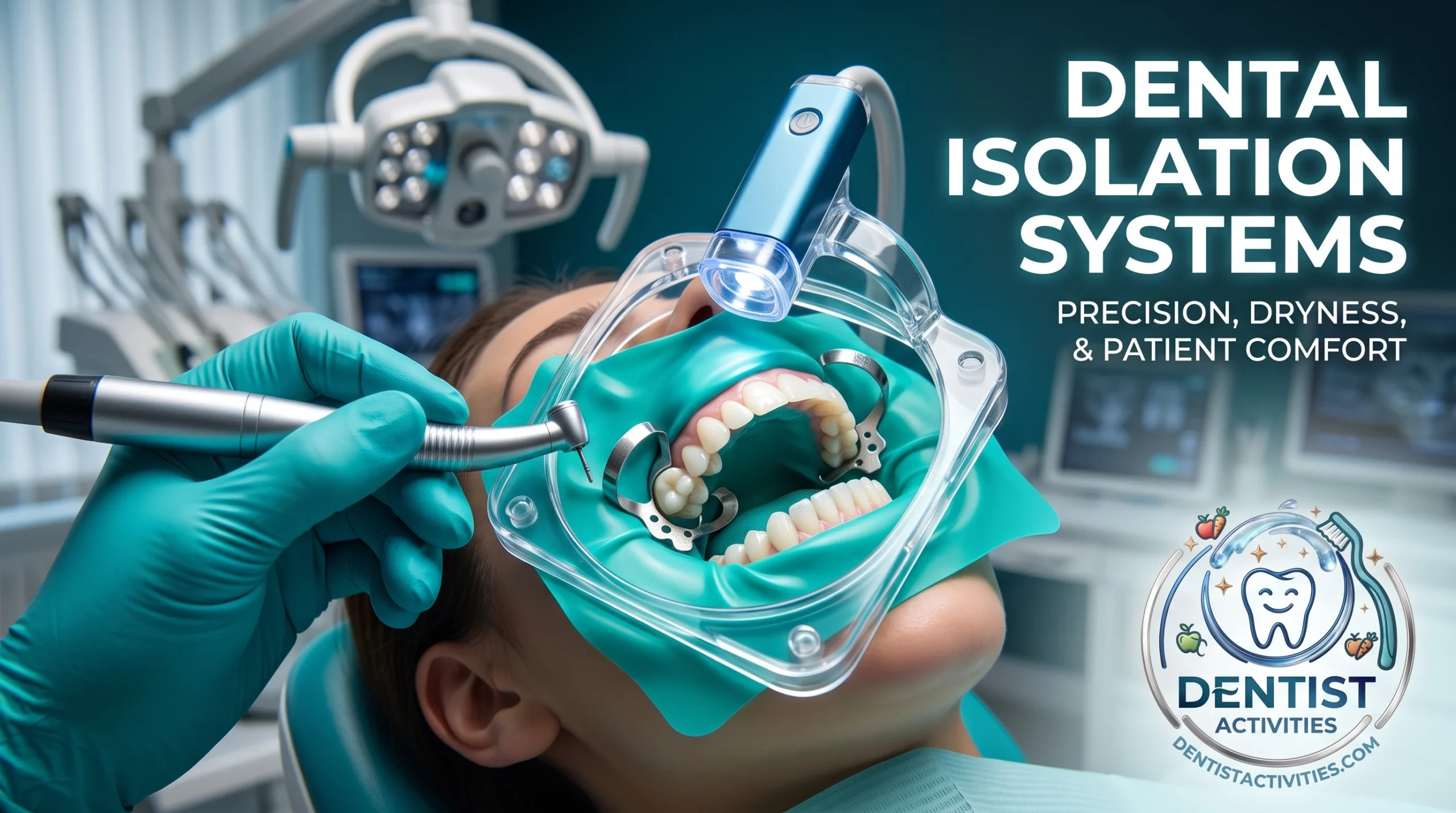
A sheet-style barrier made of latex or synthetic polyisoprene stretched across a plastic or metal frame. The clinician punches holes in the sheet corresponding to the dental arch and secures the dam around target teeth using tempered steel or plastic clamps.
- Primary Indications: Root canal therapy, complex quadrant restorative dentistry, and direct pulp capping.
- Key Advantage: Provides an absolute, moisture-proof physical seal between the tooth crown and the rest of the mouth.
- Drawback: Technique-sensitive, requires local anesthesia for clamp placement on unanesthetized gingiva, and can trigger claustrophobic sensations in anxious patients.
Integrated Continuous Suction Systems
These modern dental isolation systems connect directly to the operatory’s existing High-Volume Evacuation lines. They consist of an adapter bridge attached to a soft, flexible, medical-grade polymer or silicone mouthpiece. The mouthpiece features an integrated bite block, a broad tongue shield, a deep buccal shield, and micro-suction ports on both the maxillary and mandibular aspects.
- Primary Indications: Direct resin composites, crown and bridge preparations, ceramic cementation, sealant applications, pediatric restorations, and ultrasonic scaling.
- Key Advantage: Simultaneously provides hands-free suction, throat barrier protection, tongue and cheek retraction, and a jaw rest.
- Drawback: Higher consumable or upfront capital cost compared to basic cotton rolls; may require adaptation for patients with limited mouth opening.
Circumferential Lip and Cheek Retractors
Non-suction, flexible 3D rings made of latex-free thermoplastic elastomers. They seat gently in the upper and lower vestibular folds, passively rolling back both the upper and lower lips and buccal mucosa.
- Primary Indications: In-office tooth whitening, direct anterior cosmetic veneers, orthodontic bracket bonding, digital intraoral scanning, and diagnostic photography.
- Key Advantage: Easy insertion, comfortable for the patient over extended appointments, and leaves the entire arch visible.
- Drawback: Provides no active fluid evacuation; requires auxiliary suction to manage fluid pooling.
Absorbent Barriers and Retraction Cords
The simplest form of isolation, relying on capillary action to absorb oral fluids temporarily.
- Primary Indications: Short diagnostic exams, quick preventive adjustments, or supplementary moisture control used alongside other isolation tools.
- Key Advantage: Inexpensive and simple to place without specialized hardware.
- Drawback: Prone to rapid saturation and provides zero aspiration protection.
4. Comparing Rubber Dams vs. Continuous Suction Systems
| Clinical & Operational Feature | Traditional Rubber Dam System | Integrated Continuous Suction System | Flexible Lip/Cheek Retractor |
|---|---|---|---|
| Moisture Control Level | Complete absolute seal (fluid & vapor) | High relative isolation (continuous HVE) | Moderate (mechanical barrier only) |
| Soft Tissue Retraction | Retracts interdental papillae & gingival margins | Full tongue, cheek, and lip containment | Full circumferential lip and cheek retraction |
| Aspiration / Ingestion Safety | Absolute barrier to the pharynx | Comprehensive physical throat shield | None (throat remains open) |
| Aerosol & Splatter Capture | Moderate (traps fluid on sheet surface) | High (evacuates aerosols directly at origin) | Low (requires manual suction) |
| Setup Time & Learning Curve | 3–8 minutes; steep learning curve | Under 30 seconds; intuitive placement | Under 15 seconds; minimal learning curve |
| Two-Quadrant / Multi-Arch Access | Difficult; requires specialized split-dam punch | Yes; treats upper/lower same side concurrently | Full dual-arch anterior/premolar access |
| Patient Jaw Fatigue | High (patient must hold jaw open) | Low (built-in supportive bite block) | Moderate |
| Ideal Clinical Niche | Endodontics, Deep Class II subgingival margins | General restorative, sealants, hygiene, crowns | Photography, bleaching, bracket bonding |
5. Clinical Applications: Matching Systems to Procedures
Different dental procedures demand specific levels of moisture resistance, optical clarity, and safety controls.
Endodontic Therapy (The Absolute Standard)
For non-surgical root canal therapy, the application of a single-tooth rubber dam is non-negotiable. Microorganisms residing in oral saliva must be prevented from entering the instrumented canal system.
Furthermore, full-strength sodium hypochlorite is corrosive to oral mucosal tissues and toxic if swallowed. The mechanical clamp and clamped sheet create a secure seal that prevents irrigant leakage into the pharynx.
Direct Composite & Adhesive Restorations
For Class I through Class V resin restorations, continuous suction dental isolation systems offer significant advantages over traditional techniques. They maintain low ambient humidity in the oral cavity, evacuate water cooling from high-speed handpieces, and keep the tongue from dislodging sectional matrix bands.
When deep subgingival margins are present, a rubber dam with retraction clamps paired with Teflon tape remains effective for subgingival margin exposure.
Crown, Bridge, and Ceramic Inlay/Onlay Cementation
Final cementation of all-ceramic restorations demands strict moisture control to allow resin-modified glass ionomer or resin cements to cure properly without microleakage. All-in-one continuous suction mouthpieces allow dentists to check occlusion effortlessly, rinse the preparation, dry thoroughly, and seat restorations without saliva contaminating the prep margins.
Pediatric Dentistry and Behavior Management
Isolating pediatric patients is notoriously challenging due to smaller oral cavities, exaggerated gag reflexes, active tongues, and shorter attention spans. Modern pediatric-sized suction isolation mouthpieces protect the airway from aspirating deciduous tooth fragments or sealant materials.
The integrated bite block provides a stable jaw rest that keeps young patients comfortable while preventing sudden closures on active burs.
6. Infection Control, Aerosol Reduction, and Airway Safety
The dispersion of bio-aerosols—mixtures of air, water coolant, blood, and saliva generated by ultrasonic scalers and high-speed air turbines—presents an airborne cross-contamination risk in dental operatories.
Bio-Aerosol Mitigation at the Source
Standard saliva ejectors are low-volume, low-pressure devices that evacuate pooled liquid but fail to catch airborne aerosol plumes. By contrast, continuous suction dental isolation systems integrate high-volume evacuation directly adjacent to the tooth being prepared.
Clinical aerosol evaluations indicate that intraoral continuous high-volume evacuation isolation devices capture the vast majority of airborne particulate matter and water splatter right at the operative site, protecting the dentist, dental hygienist, assistant, and subsequent patients from pathogen exposure.
Eliminating Foreign Object Ingestion
Accidental swallowing or bronchial aspiration of dental crowns, implant screwdrivers, burs, or broken matrix bands can lead to medical emergencies requiring bronchoscopy or surgical intervention. Continuous isolation shields and rubber dams form a barrier over the oral pharyngeal pathway, ensuring dropped materials are safely recovered from the intraoral shield or suction channel.
7. Practice Economics, Ergonomics, and Clinical Efficiency
Adopting advanced dental isolation systems delivers noticeable returns across three primary dimensions: clinical time savings, ergonomic comfort, and expanded solo-operator capability.
Significant Reduction in Chair Time
Empirical clinic time-motion evaluations show that modern all-in-one continuous suction isolation systems reduce overall procedure times by 20% to 40%. These time savings stem from:
- Eliminating the need to constantly swap out saturated cotton rolls or stop to let the patient spit.
- The ability to perform two-quadrant dentistry (preparing and restoring upper and lower teeth on the same side in one uninterrupted appointment).
- Fewer re-bonds or redone restorations caused by saliva contamination during composite placement.
Optimizing Four-Handed vs. Solo-Operator Workflows
In a traditional setup, the dental assistant must hold an evacuation suction tip with one hand and a mirror or air/water syringe with the other. A hands-free suction isolation system takes over moisture evacuation and tongue retraction.
This frees the assistant to focus on mixing materials, managing digital impressions, handling curing lights, entering clinical charts, and guiding the patient. In hygiene operatories or solo-doctor environments, it allows the clinician to work smoothly without requiring a dedicated chairside assistant.
Consumables vs. Autoclavable Hardware Costs
When assessing modern suction isolation devices, practices can balance their equipment budget between two options:
- Autoclavable Mouthpieces: Made from durable, medical-grade silicone capable of withstanding dozens of steam autoclave sterilization cycles. This model minimizes per-patient consumable expenses down to pennies per use.
- Single-Use Disposable Mouthpieces: Ideal for offices that prefer to eliminate the labor and turnaround time of wrapping and autoclaving mouthpieces between patients.
8. Step-by-Step Guide: How to Select the Right Dental Isolation System
Every dental practice manages a distinct case mix, ranging from pediatric care and cosmetic smile makeovers to high-volume reconstructive surgery. Use the following framework to assess your isolation requirements:
- Audit Your Procedure Distribution: If your day consists primarily of endodontic cases, keep classic rubber dam kits fully stocked and easily accessible at every station. If your practice focuses on composite fillings, pediatric restorations, crown preparations, and hygiene debridement, invest in high-volume suction isolation units for each operatory.
- Verify High-Volume Suction Capacity: Integrated continuous suction systems require adequate vacuum pressure from your central suction motor. Ensure your operatory lines maintain consistent airflow when paired with multi-port isolation mouthpieces.
- Check Mouthpiece Size Range: A single mouthpiece size does not fit every patient. Choose an isolation system that offers varied sizing—from extra-pediatric and pediatric up through small, medium, and large adult sizes—to prevent soft palate pinching or dislodgement.
- Balance Workflow Needs: For fast-paced multi-chair clinics, single-use mouthpieces keep turnaround times quick. For cost-conscious practices looking to maximize investment returns, autoclavable silicone mouthpieces offer strong long-term savings.
9. Overcoming Clinical Challenges and Improving Patient Acceptance
Even the most advanced isolation device is only as effective as the patient’s willingness to tolerate it. Applying thoughtful chairside techniques ensures smooth insertion and high patient compliance.
Preventing Gagging and Discomfort
- Select the Correct Mouthpiece Size: An oversized mouthpiece will impinge on the palatoglossal arch and trigger gag reflexes. If a patient feels pressure at the back of their throat, step down to a smaller size.
- Lubricate the Material: Moisten the isolation mouthpiece with water or a small dab of water-soluble lubricant before insertion to avoid dry friction against delicate buccal mucosa.
- Coaching Nose Breathing: Instruct the patient beforehand: “This device will keep your tongue comfortable, protect your throat from water, and give your jaw a soft place to rest. All you need to do is relax and breathe normally through your nose.”
Managing Claustrophobia and Anxiety
For nervous patients, traditional rubber dams can sometimes feel restrictive. In these situations, transparent non-latex dams, flexible open-face 3D retractors, or clear suction mouthpieces provide continuous reassurance by maintaining an open peripheral field of view and allowing unhindered nasal breathing.
Conclusion: Building a Modern Isolation Protocol
Maintaining an uncontaminated, highly visible operating field remains a core requirement for predictable, long-lasting clinical dentistry. Modern dental isolation systems bridge the gap between strict adhesive standards and daily chairside efficiency.
By pairing the absolute seal of classic rubber dams for endodontics with the speed, aerosol capture, and ergonomic benefits of continuous suction isolation systems for restorative care, practices can elevate procedural safety, lower stress on their clinical team, and deliver consistently reliable outcomes for every patient.
Frequently Asked Questions (FAQs)
What are the main types of dental isolation systems used today?
The primary dental isolation systems include traditional rubber dams with clamps, integrated all-in-one continuous suction systems, circumferential flexible lip/cheek retractors, and absorbent matrix barriers like cotton rolls and dry angles.
Is a rubber dam still mandatory for endodontic treatment?
Yes. Professional endodontic guidelines view the rubber dam as essential for root canal procedures. It provides a clean, aseptic field that keeps oral bacteria out of the root canal system while protecting the patient’s pharynx from caustic irrigants like sodium hypochlorite and dropped instruments.
How do modern suction isolation systems reduce procedure chair time?
Continuous suction isolation systems combine tongue retraction, cheek clearance, throat protection, bite-block support, and continuous high-volume evacuation into one hands-free device. This eliminates interruptions for manual suctioning or cotton roll replacements and enables two-quadrant prep and restoration in a single visit, often reducing procedure time by 20% to 40%.
Can continuous suction dental isolation systems capture aerosols effectively?
Yes. Clinical aerosol evaluations demonstrate that continuous high-volume suction systems situated directly at the intraoral preparation site can capture over 90% of water spray, saliva, and bio-aerosol splatter before it disperses into the operatory.
Are continuous suction isolation mouthpieces reusable or single-use?
It depends on the system and material choice. Several modern isolation systems offer both single-use disposable mouthpieces (for rapid operatory turnaround) and autoclavable medical-grade silicone mouthpieces (which can be sterilized in a standard steam autoclave for 50 or more cycles, keeping consumable costs low).